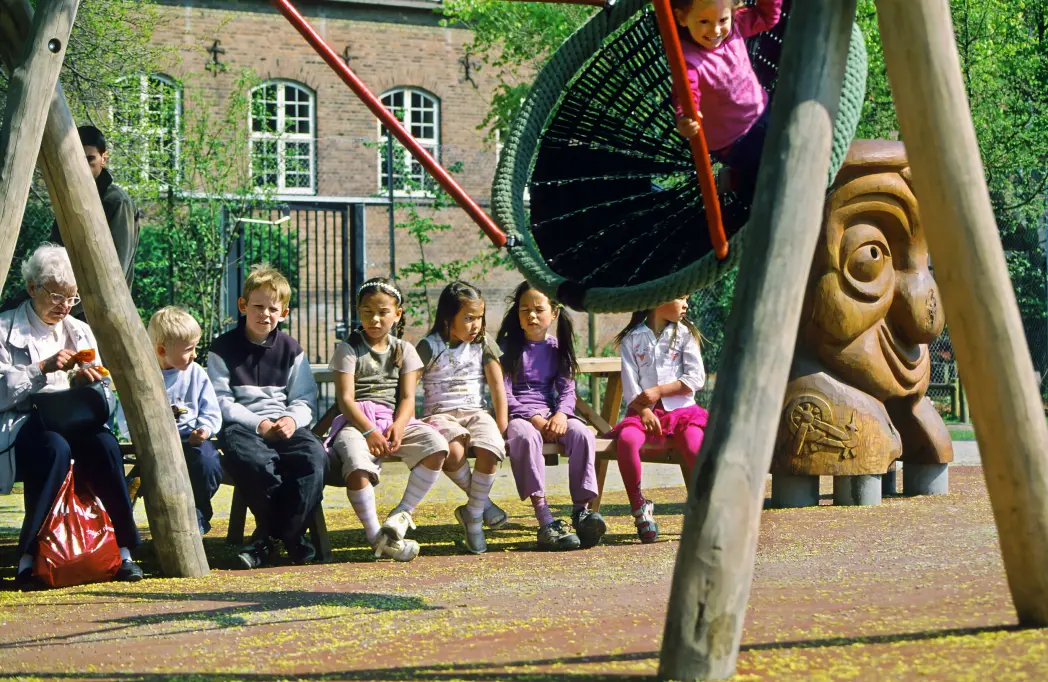
An Asian student sits with the book open in front of him, while the others in the class are busy.
The teacher speaks, the students answer, and the tasks are explained. The pencils move across the paper. The student remains seated. The words do not make sense. Greenlandic is not understood. Danish only in glimpses. The gaze shifts between the booklet and the others in the class.
After a while, the student is sent out into the hallway with some books, which the child is expected to continue working with on his own.
For Asian children who come to Greenland late as family reunification children, the encounter with the primary school can be difficult.
Not because anyone wants it that way. But because the school often lacks the time and resources to help students who enter the classroom without knowing either Greenlandic or Danish.
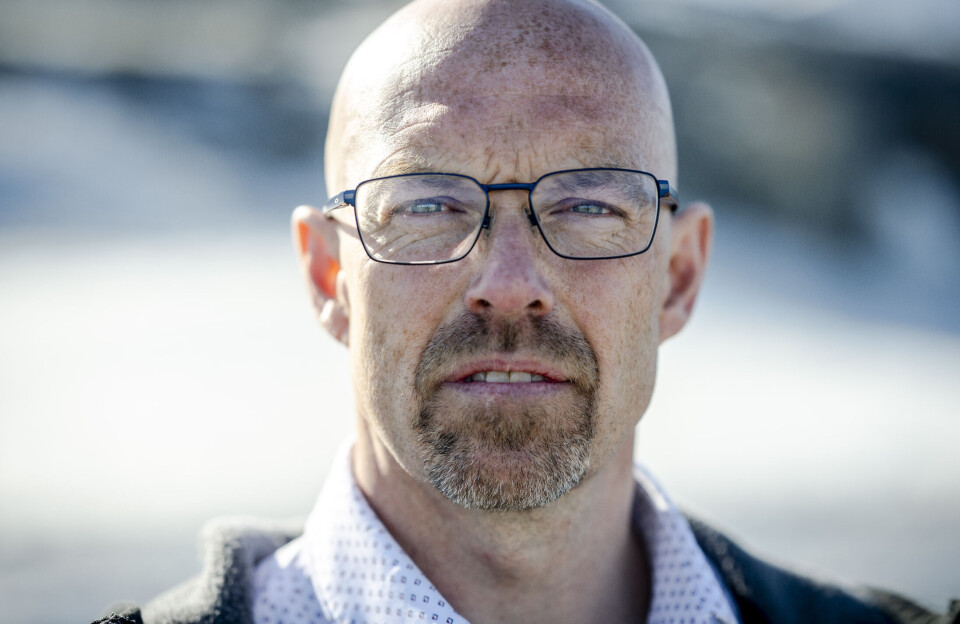
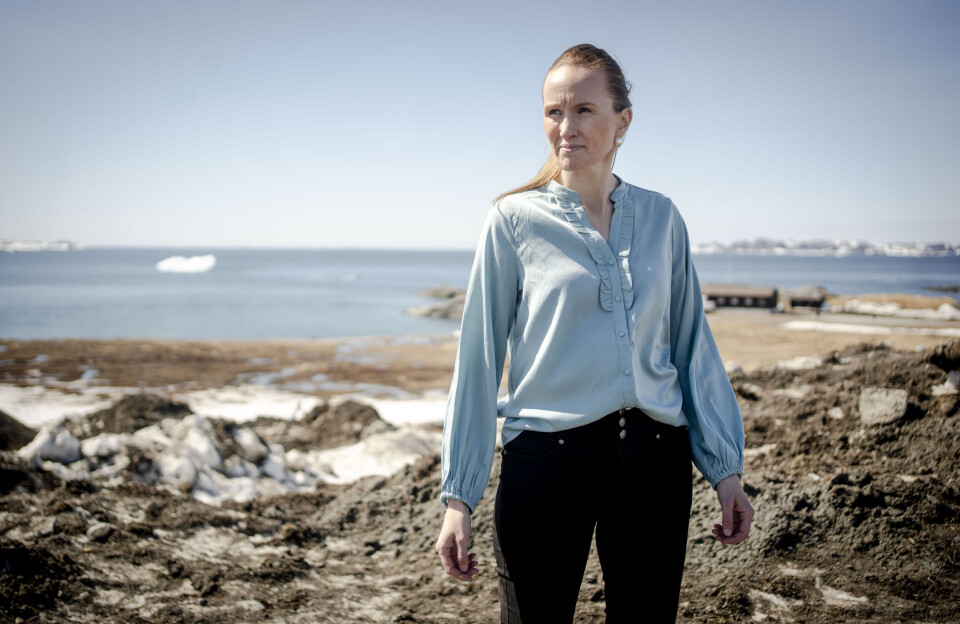
These are some of the main points in the article about Asian children in primary school, which the researchers, associate professor emerita from RUC Kristine Juul and researcher at the social pedagogical seminar in Ilulissat Henrik Nielsen, recently published in Tidsskriftet Grønland.
AG has brought them together over an uneven Teams connection to elaborate on their points. Initially, they both emphasize that the conclusions are based on a limited empirical basis, as the study is based on experiences from selected cities and therefore cannot be easily generalized to all of Greenland.
The challenges are different
According to the two researchers, it is important to distinguish between different groups of children with an Asian background.
Some were born in Greenland. Others have been reunited with their families at an early age. They have often gone to kindergarten and learned Greenlandic long before they meet the school's academic requirements.
For them, the starting point is completely different.
- If you have gone to kindergarten and learned Greenlandic there, you are already far ahead, explains Henrik Nielsen.
He continues:
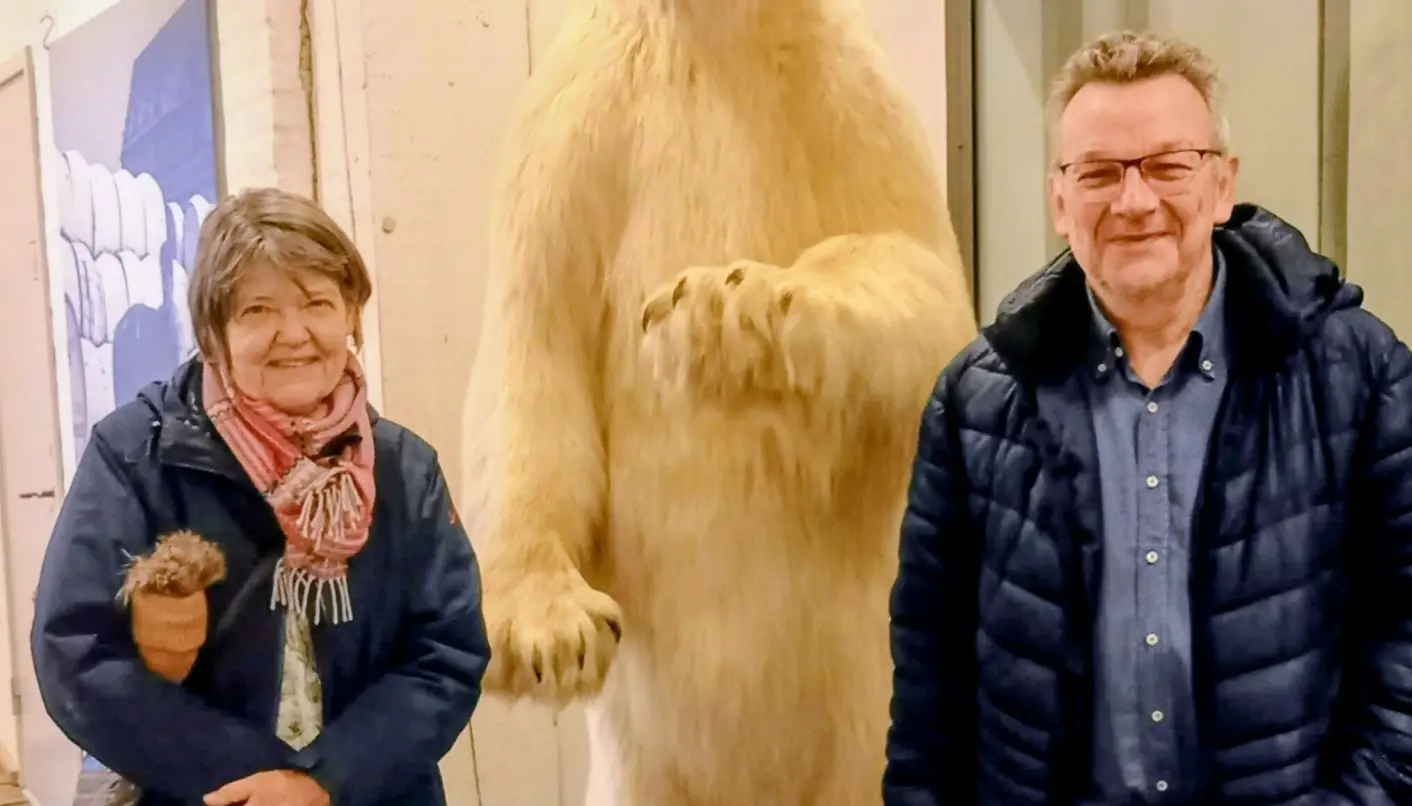
- The problems are particularly significant for children who first come to Greenland as 10, 12 or 15 years old, after having already gone to school in the Philippines or Thailand. They come not only with a different language, but also with experiences from a different teaching culture. They are used to a different framework, a different discipline and different expectations for both students and teachers, he says.
When they then enter a Greenlandic classroom, they must simultaneously learn new languages, decode social rules and find their way in a school environment that is already under pressure.
For some it will be a shock.
A school without a reception device
One of the big problems is that many of the children are not met by a reception device that is designed to handle their challenges.
They are not necessarily offered a special course where they can slowly acquire language and school culture. Instead, they are put directly into a regular class.
- This leaves both the student and the teacher in an almost impossible situation. The teacher has to teach the rest of the class and at the same time deal with a student who may not understand what is going on. And the student quickly notices that he or she has been left out, points out Kristine Juul, who has previously researched immigrants' cultural encounters when they come to a society with a significantly different culture than their own.
The stories of children who were sent out of school with some books because the teacher did not have the opportunity to differentiate the teaching sufficiently surprised the two researchers.
- The poor teacher has to do text analysis with the students at the same time as having someone who understands nothing at all? And then they send them out to study on their own, says Kristine Juul, emphasizing that this is not necessarily an expression of indifference.
She continues:
- On the contrary, many teachers and school principals are well aware of the problem. But in a school that is already struggling with a lack of resources, sick teachers, difficult physical conditions and many other challenges, this group of students easily becomes a task that cannot be solved properly.
Under the radar
The risk is that some Asian students will be overlooked. The children who make noise or do not show up are quickly discovered.
But those who sit quietly and do not understand can easily disappear into the crowd.
- We know incredibly little about these children because they go under the radar, says Henrik Nielsen and fears the consequences:
- When a child does not understand the teaching and is not involved, the desire to learn disappears. School does not become a place where you succeed - but a place where you are constantly aware of what you cannot do.
Kristine Juul also points out that the problem is not just about language. According to her, family reunification itself can be difficult, partly because the visa and residence rules set the framework for the children's integration.
Some children have lived apart from their mother or father for many years and are only brought to Greenland late because the family is rushing to get them up before they turn 18.
- This means that they have to adjust to both a new family routine and a new school system at the same time. And it's hard if you come to Greenland as a 15-year-old and can't speak either Danish or Greenlandic, he says.
When motivation disappears
For some, it ends up that they give up. When they don't get an academic foundation in primary school, they are at a disadvantage when it comes to a youth education, since the language of instruction is most often Danish.
Many quickly hit a new wall - linguistic and academic - and drop out.
- It is not only a personal defeat. It is also a loss for society. Because instead of becoming part of the educated workforce, some risk ending up as unskilled workers in the same low-paid jobs as their parents, Henrik Nielsen points out, warning of the risk that a new underclass is emerging among the Asian young people.
A symptom of a larger crisis
The story of the Asian students is also a story about the general condition of the elementary school.
Both researchers make it clear that this group is not necessarily the school's biggest problem.
There are many other children in Greenland with difficult upbringings and high needs. And many schools are already working under very heavy pressure.
But precisely for this reason, the Asian students become a mirror that shows how difficult the system is having to accommodate children with special needs.
School leaders, whom the two spoke to, were according to them both aware of the problem and frustrated at not being able to do more. not because the will was lacking, but because the resources were.
Therefore, it is also too easy to make the issue a pure integration problem. The challenge extends further into the core task of the primary school: to prepare the students for the next step.
For some - not least those without a linguistic foothold - the transition to a youth education is difficult because the foundation is not in place.
Abonnementer
Sermitsiaq.gl - web artikler
- Adgang til alle artikler på Sermitsiaq.gl
- Pr. måned kr. 59.00
- Pr. år kr. 650.00
Sermitsiaq - E-avis
- Adgang til Sermitsiaq e-avis som udkommer hver fredag
- Adgang til alle artikler på Sermitsiaq.gl
- Pris pr. måned kr. 191
- Pris pr. år kr. 1.677
AG - Atuagagdliutit E-avis
- Adgang til AG - Atuagagdliutit e-avis som udkommer hver fredag
- Adgang til alle artikler på Sermitsiaq.gl
- Pris pr. måned kr. 191
- Pris pr. år kr. 1.677
Sermitsiaq.AG+
- Adgang til AG - Atuagagdliutit e-avis som udkommer hver fredag
- Adgang til Sermitsiaq e-avis som udkommer hver fredag
- Adgang til alle artikler på Sermitsiaq.gl
- Adgang til Arnanut e-magasin
- Adgang til Nutserisoq.gl
- Ved interesse send en mail til abonnement@sermitsiaq.gl
Kære Læser, Velkommen til Sermitsiaq.gl – din kilde til nyheder og kritisk journalistik fra Grønland. For at kunne fortsætte vores vigtige arbejde med at fremme den frie presse og levere dybdegående, kritisk journalistik, har vi indført betaling for udvalgte artikler. Dette tiltag hjælper os med at sikre kvaliteten af vores indhold og støtte vores dygtige journalister i deres arbejde med at bringe de vigtigste historier frem i lyset. Du kan få adgang til betalingsartiklerne fra kun kr. 59,- pr. måned. Det er nemt og enkelt at købe adgang – klik nedenfor for at komme i gang og få fuld adgang til vores eksklusive indhold. Tak for din forståelse og støtte. Dit bidrag hjælper os med at fortsætte vores mission om at levere uafhængig og kritisk journalistik til Grønland.