These weeks, new court documents and testimonies from the Jeffrey Epstein case are being published. They describe how the late and convicted financier spent years associating with countless famous and powerful people, ranging from presidents like Bill Clinton and Donald Trump to royals like Norwegian Crown Princess Mette-Marit and British Prince Andrew.
- How could so many people be seduced by Epstein and be indifferent to all morality? asks a puzzled reader Juliane, who has written to Videnskab.dk's reader's mailbox, 'Ask Science'.
According to Henrik Høgh-Olesen, professor of psychology at Aarhus University, we can look for the answer in our fundamental nature as herd animals. We are enchanted by money and status, and we are masters at seeing exactly what we want to see.
We are hierarchical animals
Social psychological research shows that people have a strong tendency to obey people with power and high status. As early as the 1960s, psychologist Stanley Milgram showed in his famous obedience experiments that ordinary people could be made to perform actions that they themselves experienced as morally reprehensible if they believed that an authority expected it. According to Henrik Høgh-Olesen, the same mechanisms play into real power relations:
- We humans are social animals and hierarchical animals. We are very concerned with status and power, and we want to associate with people who are highly placed because it gives us access to resources that we would not otherwise have, he says.
In Epstein's case, he was the focal point of an enormous economic elite. This created a fascination that even people with high status could be seduced by.
As Henrik Høgh-Olesen puts it, a royal can bask in Epstein's wealth, while Epstein can bask in the royal's status.
- Money, power and status are enchanting, he states.
Selective blindness
Henrik Høgh-Olesen explains that when the benefits of a friendship are great enough, a psychological defense mechanism comes into play: Selective perception (selective blindness). This means that we see what we want to see - what we enjoy and benefit from - and become selectively blind to the warning lights. Research shows that people tend to rationalize and downplay problematic behavior, especially when they stand to gain social or economic benefits. This is called moral disengagement.
- One's quest for status can be so great that it overshadows both common sense and morality. Like an ostrich, one sticks one's head in the ground, says the professor.
In Epstein's case, people focused on the private jet, the luxurious life and the network, while the rumors of abuse of young girls were ignored.
When the abnormal becomes normal
People reflect on each other, and social psychological research shows that behavior quickly normalizes if no one in the group reacts to problematic actions. When you see that Epstein is surrounded by strong, powerful and resourceful people, it functions as a social stamp of approval. It creates doubt about one's own judgment, explains Henrik Høgh-Olesen:
- Can it really be true that he is a bad person when he has these other people as acquaintances?
This rationalization makes us interpret the participation of others as acceptance and normalization of the behavior.
- You think that he couldn't possibly have fooled so many powerful people, or you convince yourself that the negative stories in the media are just malicious gossip.
Beauty is good
According to Henrik Høgh-Olesen, Jeffrey Epstein also exploited a very basic human bias: We unconsciously associate beauty with goodness. For example, a 1991 meta-analysis shows that people attribute more positive traits to attractive people compared to less attractive people. At the same time, a 2015 study indicates that beautiful people get more job offers than less attractive people.
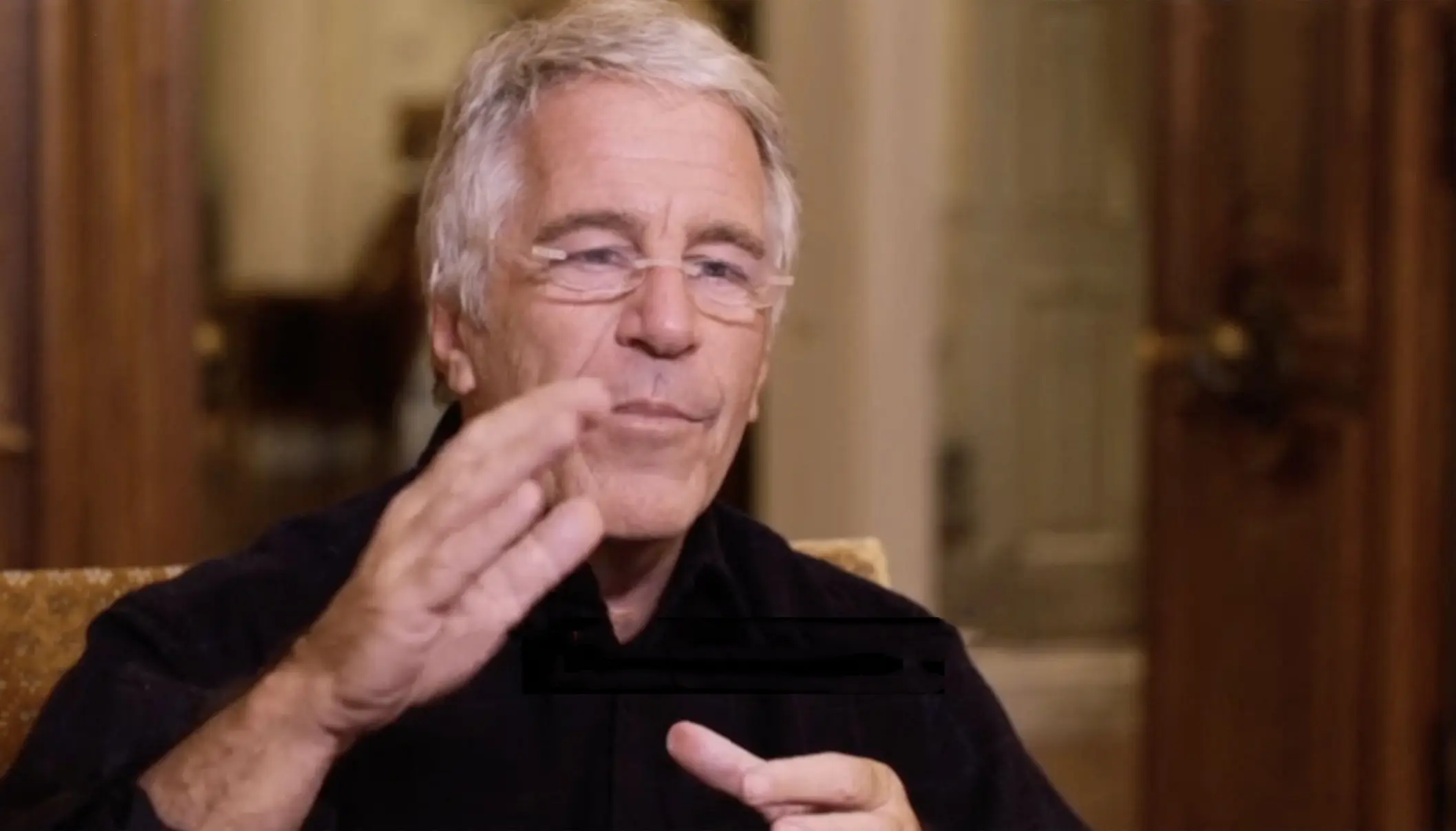
- When Epstein is both rich and powerful, the effect is amplified. That makes it much easier to seduce and manipulate people, the professor explains.
Can it happen to everyone?
Does that mean that we could all have ended up in Epstein’s ‘Little Black Book’ if we had the opportunity? Both yes and no. According to Henrik Høgh-Olesen, we all have a need for status, but there are big differences in our personality and our moral compass. In personality psychology, the trait Conscientiousness plays a crucial role. This trait, which is part of the Big Five model (five-factor model), is linked to responsibility, self-control and morality.
- Some people are much more concerned with conscience and morality than with self-optimization and status, he explains.
- For them, the suspicion of abuse will outweigh the benefit of knowing a billionaire.
A 2015 study suggests that people with high conscientiousness are more likely to make ethical decisions and avoid letting personal benefits overshadow moral considerations.
But for those who are more concerned with self-optimization, the temptation to turn a blind eye will be overwhelming.
According to Henrik Høgh-Olesen, it is the combination of human social nature, our desire for status and individual choices that determine whether we intervene.
Abonnementer
Sermitsiaq.gl - web artikler
- Adgang til alle artikler på Sermitsiaq.gl
- Pr. måned kr. 59.00
- Pr. år kr. 650.00
Sermitsiaq - E-avis
- Adgang til Sermitsiaq e-avis som udkommer hver fredag
- Adgang til alle artikler på Sermitsiaq.gl
- Pris pr. måned kr. 191
- Pris pr. år kr. 1.677
AG - Atuagagdliutit E-avis
- Adgang til AG - Atuagagdliutit e-avis som udkommer hver onsdag
- Adgang til alle artikler på Sermitsiaq.gl
- Pris pr. måned kr. 191
- Pris pr. år kr. 1.677
Sermitsiaq.AG+
- Adgang til AG - Atuagagdliutit e-avis som udkommer hver onsdag
- Adgang til Sermitsiaq e-avis som udkommer hver fredag
- Adgang til alle artikler på Sermitsiaq.gl
- Adgang til Arnanut e-magasin
- Adgang til Nutserisoq.gl
- Ved interesse send en mail til abonnement@sermitsiaq.gl
Kære Læser, Velkommen til Sermitsiaq.gl – din kilde til nyheder og kritisk journalistik fra Grønland. For at kunne fortsætte vores vigtige arbejde med at fremme den frie presse og levere dybdegående, kritisk journalistik, har vi indført betaling for udvalgte artikler. Dette tiltag hjælper os med at sikre kvaliteten af vores indhold og støtte vores dygtige journalister i deres arbejde med at bringe de vigtigste historier frem i lyset. Du kan få adgang til betalingsartiklerne fra kun kr. 59,- pr. måned. Det er nemt og enkelt at købe adgang – klik nedenfor for at komme i gang og få fuld adgang til vores eksklusive indhold. Tak for din forståelse og støtte. Dit bidrag hjælper os med at fortsætte vores mission om at levere uafhængig og kritisk journalistik til Grønland.