Adrenaline rushes through our bodies as we watch athletes swoosh down snowy slopes, toboggan runs and across ice at breakneck speed and with impressive elegance at the Winter Olympics.
When the first Winter Olympics were held in Chamonix, France in 1924, all 16 disciplines were held outdoors. Naturally, snow and freezing temperatures were required before skiers could take to the slopes and figure skaters could take to the ice.
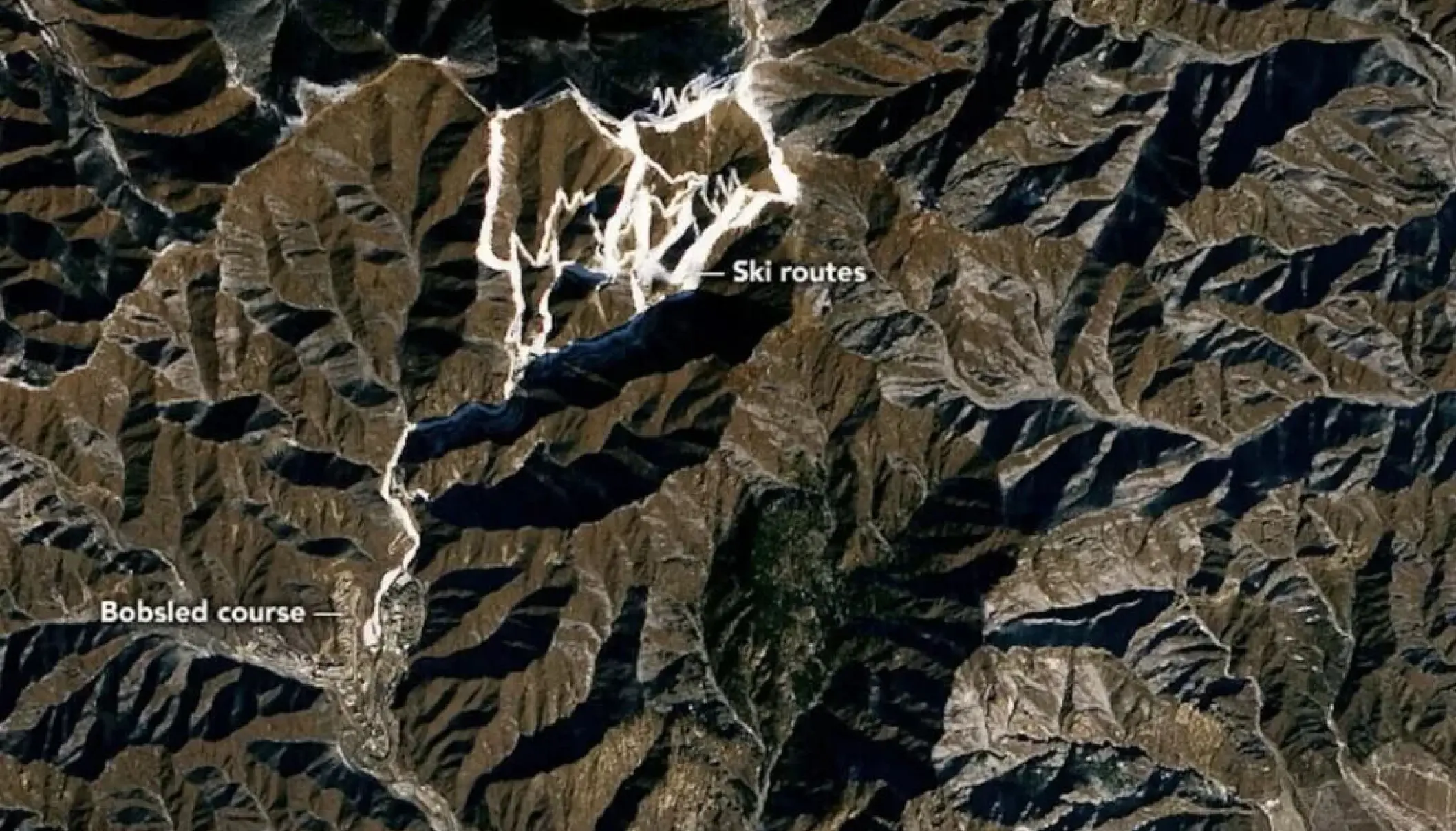
Nearly 100 years later, in 2022, the world will see skiers compete on slopes at the Beijing Winter Olympics on virtually 100 percent artificial snow.
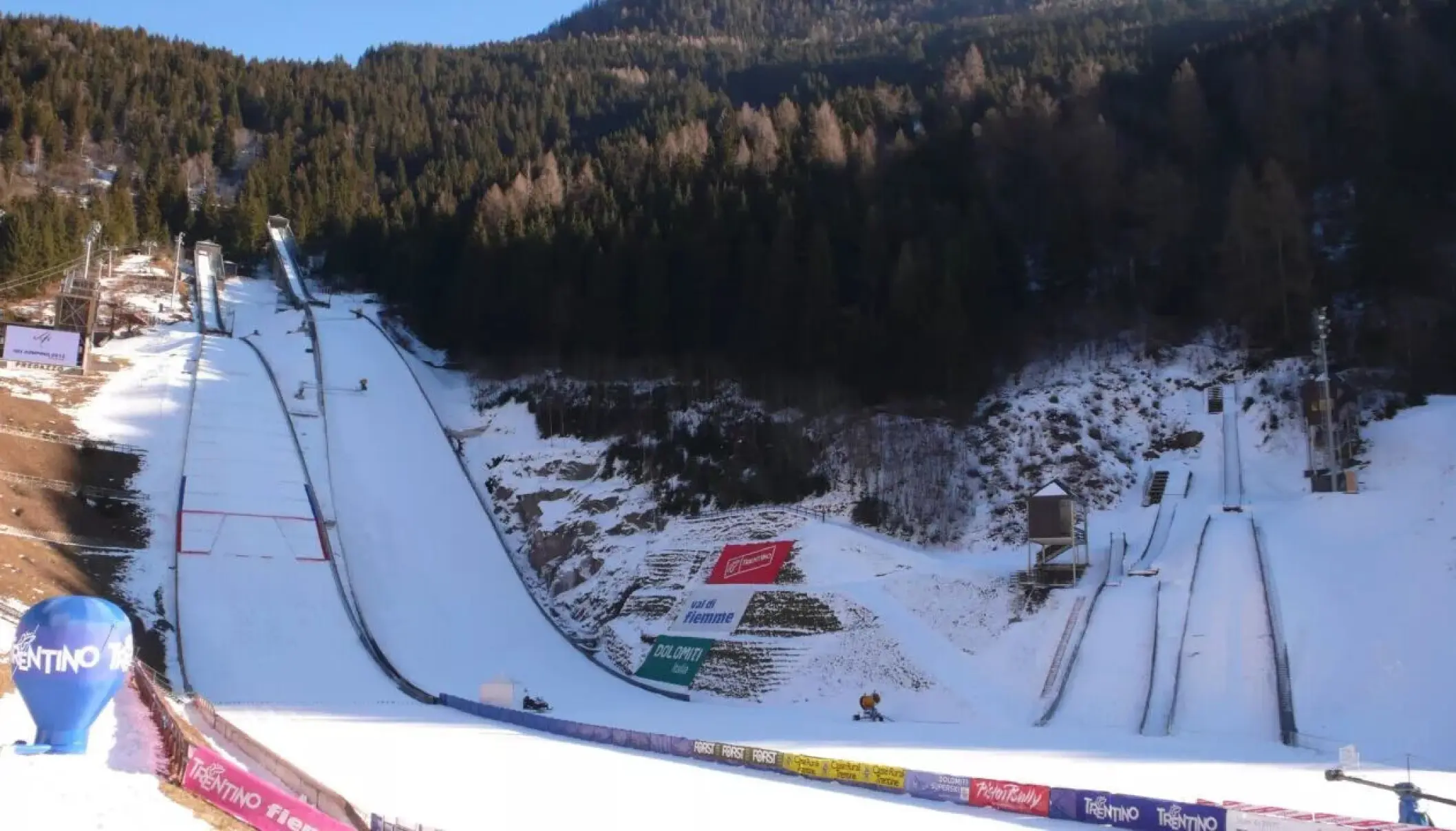
Today, toboggan runs and ski jumps are equipped with their own refrigeration systems, and four of the original disciplines are now held indoors: figure skating, speed skating, curling and ice hockey, all held in climate-controlled halls.
Technological innovation made the Beijing Winter Games possible. Ahead of the 2026 Winter Olympics in northern Italy, where snowfall was below average at the start of the season, organizers have built large lakes near the main venues to ensure sufficient water for the production of artificial snow.
But in an increasingly warm climate, artificial snow can only compensate to a certain extent. What will the Winter Olympics look like in another 100 years as global temperatures rise? Will the Games even be possible with new technological solutions?
Former host cities that will be too hot
The average daytime temperature in February in host cities for the Winter Olympics has increased significantly since the first Olympic Games in Chamonix. In the period from the 1920s to the 1950s, it was around 0.4 degrees Celsius.
By the beginning of the 21st century, it had risen to just under 8 degrees. In a recent study, scientists examined the host cities of 19 previous Winter Olympics to assess how they will fare under future climate change. The results are discouraging.
By mid-century, four previous host cities – Chamonix, Sochi in Russia, Grenoble in France and Garmisch-Partenkirchen in Germany – will no longer have a climate that is stable enough to host the Winter Olympics.
This is true even under the UN's most optimistic climate scenario, which assumes that the world's countries rapidly reduce their greenhouse gas emissions. If fossil fuel consumption continues at a high level, Squaw Valley in California and Vancouver in Canada will also be on the list of cities where the climate is no longer stable enough for the Winter Games.
According to the researchers, the climate in the 2080s will be so unstable that 12 out of 22 former host cities will no longer be able to hold the outdoor disciplines of the Winter Olympics. Among them are Turin in Italy, Nagano in Japan and Innsbruck in Austria.
The 2026 Winter Olympics will have a five-week break between the Olympic and Paralympic Games, which will run until mid-March. Host countries are responsible for both events, and for an increasing number of venues, it may be difficult to ensure sufficient snow, even with artificial snow, as winter seasons shorten.
Today, ideal conditions for snowmaking require a dew point temperature (the temperature at which a given air mass reaches 100 percent relative humidity and moisture in the air begins to condense) of around minus 2 degrees Celsius or lower.
More moisture in the air causes snow and ice to melt at lower temperatures, affecting both slopes and ice on bobsleigh, skeleton and luge tracks. As Colorado snow and sustainability researchers (and passionate skiers), we’ve been following the developments closely, studying how climate change is affecting the mountains and winter sports we love.
Conditions vary from place to place and from year to year
The Earth’s climate will warm overall in the coming decades. Warmer air often means more rain in the winter, especially at lower elevations. At the same time, snow is covering an ever-shrinking area globally.
The combination of low snowfall and high temperatures made the start of the 2025-26 winter season particularly bad for Colorado ski resorts. However, the local changes vary. In northern Colorado, snowfall has been declining since the 1970s, but the decline has been particularly pronounced in the highest elevations.
A future climate may also become more humid, which affects the possibilities for snow production and may also have consequences for bobsled, luge and skeleton tracks. Of the 16 winter sports at the Winter Olympics today, half are dependent on temperature and snow: alpine skiing, biathlon, cross-country skiing, freestyle skiing, Nordic combined, ski jumping, ski mountaineering and snowboarding.
In addition, three disciplines are sensitive to both temperature and humidity: bobsled, luge and skeleton.
Technology is also changing
Technological developments over the past century have helped the Winter Olympics to adapt to the changes. Ice hockey moved indoors, followed later by ice skating. Luge and bobsled tracks were given refrigeration in the 1960s.
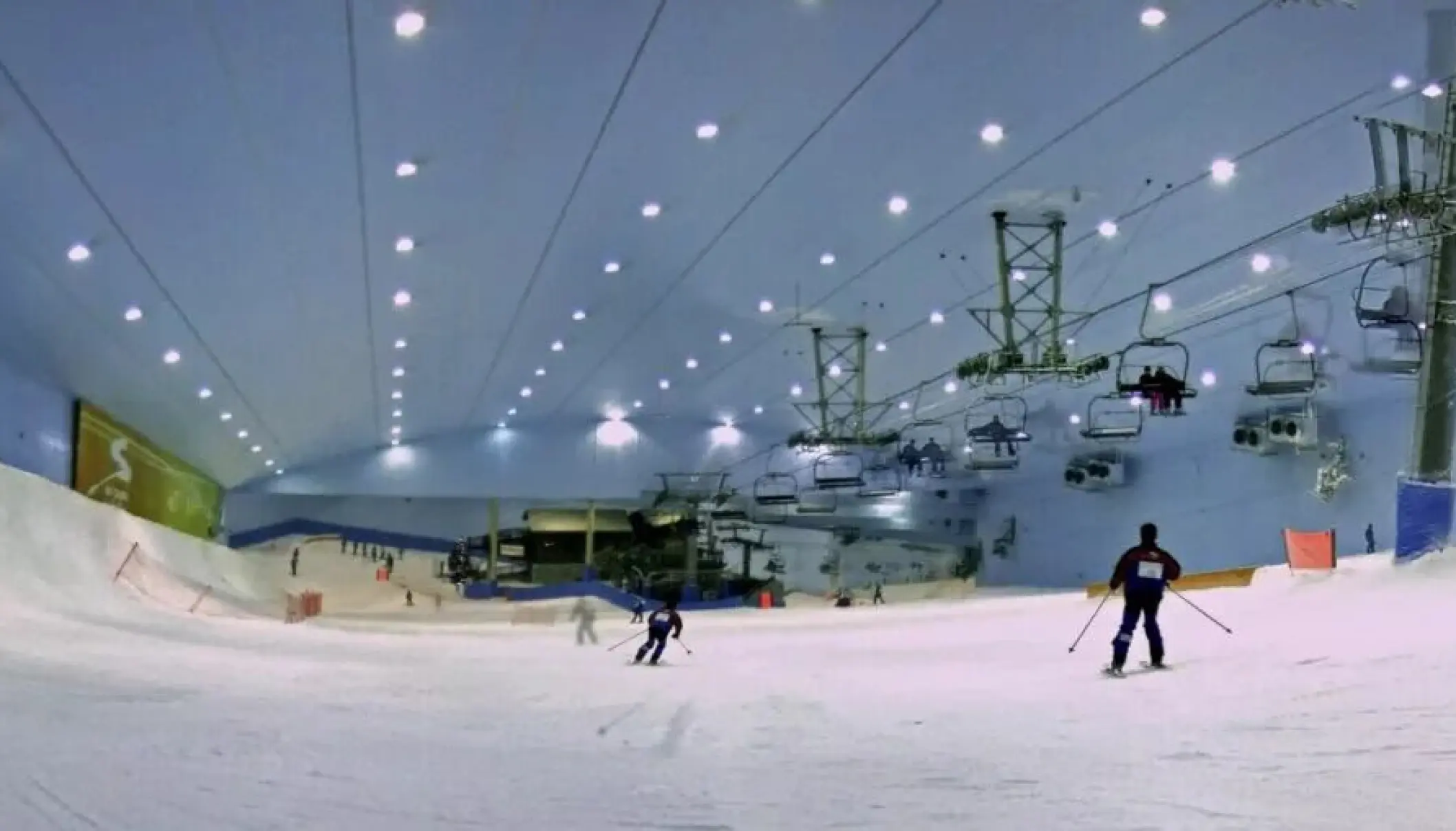
At the 1980 Lake Placid Winter Olympics, artificial snow was used to supplement the natural snow on the slopes. Today, indoor ski resorts make it possible to ski all year round. Ski Dubai, which opened in 2005, has five slopes on a hill the height of a 25-story building located inside a holiday complex attached to a shopping mall.
At the same time, several ski resorts are using so-called 'snowfarming', where snow is collected and stored for the next season. The method is not new, but as snowfall decreases and snowmaking problems increase, more resorts are choosing to store surplus snow to be better prepared for the winter.
Scarce resources in a warming world
But both snowmaking and cooling require energy and water; two resources that are becoming increasingly problematic in a warming world. Water is already a scarce resource in some areas, and if energy consumption is based on fossil fuels, it contributes further to climate change.
The International Olympic Committee recognises that the future climate will have a major significance for both the Winter and Summer Olympics, while also stressing the importance of adapting in a sustainable manner. In the long term, the Winter Olympics may therefore be limited to more northern host cities (such as Calgary in Canada) or moved to higher altitudes where the cold lasts longer.
The Summer Games are also feeling the effects of climate change
The Summer Olympics also face a number of challenges. High temperatures and humidity can make it difficult to compete, but summer sports generally have greater flexibility than winter sports. For example, extreme heat can be mitigated by shifting competitions to a different time of year. The 2022 FIFA World Cup, which is usually held in the summer, was moved to November so that Qatar could host. What makes adaptation more difficult for the Winter Olympics is that all disciplines rely on snow or ice. The future depends on action on climate change In uncertain times, the Olympics serve as a rallying point for the world. Audiences cheer on great sporting achievements, such as when Jean-Claude Killy won all three alpine disciplines in 1968, and on tales of willpower and courage, such as Jamaica’s legendary bobsled team that took the world by storm in 1988.
The outdoor disciplines of the Winter Olympics could look significantly different in the future. How big the changes will be will depend largely on how the world’s countries choose to deal with climate change.
This article was originally published at The Conversation and is translated by Stephanie Lammers-Clark.
Abonnementer
Sermitsiaq.gl - web artikler
- Adgang til alle artikler på Sermitsiaq.gl
- Pr. måned kr. 59.00
- Pr. år kr. 650.00
Sermitsiaq - E-avis
- Adgang til Sermitsiaq e-avis som udkommer hver fredag
- Adgang til alle artikler på Sermitsiaq.gl
- Pris pr. måned kr. 191
- Pris pr. år kr. 1.677
AG - Atuagagdliutit E-avis
- Adgang til AG - Atuagagdliutit e-avis som udkommer hver onsdag
- Adgang til alle artikler på Sermitsiaq.gl
- Pris pr. måned kr. 191
- Pris pr. år kr. 1.677
Sermitsiaq.AG+
- Adgang til AG - Atuagagdliutit e-avis som udkommer hver onsdag
- Adgang til Sermitsiaq e-avis som udkommer hver fredag
- Adgang til alle artikler på Sermitsiaq.gl
- Adgang til Arnanut e-magasin
- Adgang til Nutserisoq.gl
- Ved interesse send en mail til abonnement@sermitsiaq.gl
Kære Læser, Velkommen til Sermitsiaq.gl – din kilde til nyheder og kritisk journalistik fra Grønland. For at kunne fortsætte vores vigtige arbejde med at fremme den frie presse og levere dybdegående, kritisk journalistik, har vi indført betaling for udvalgte artikler. Dette tiltag hjælper os med at sikre kvaliteten af vores indhold og støtte vores dygtige journalister i deres arbejde med at bringe de vigtigste historier frem i lyset. Du kan få adgang til betalingsartiklerne fra kun kr. 59,- pr. måned. Det er nemt og enkelt at købe adgang – klik nedenfor for at komme i gang og få fuld adgang til vores eksklusive indhold. Tak for din forståelse og støtte. Dit bidrag hjælper os med at fortsætte vores mission om at levere uafhængig og kritisk journalistik til Grønland.