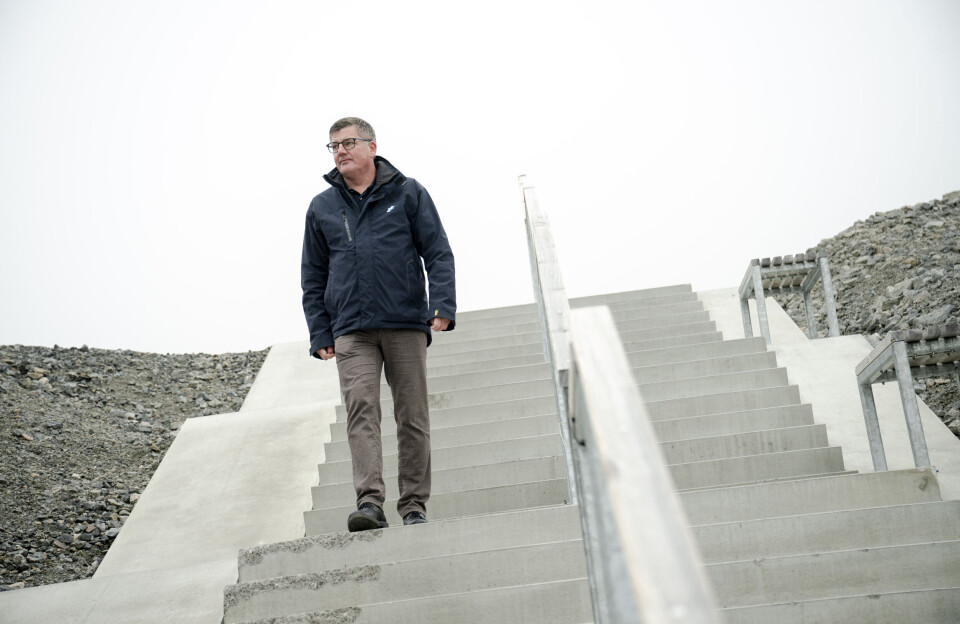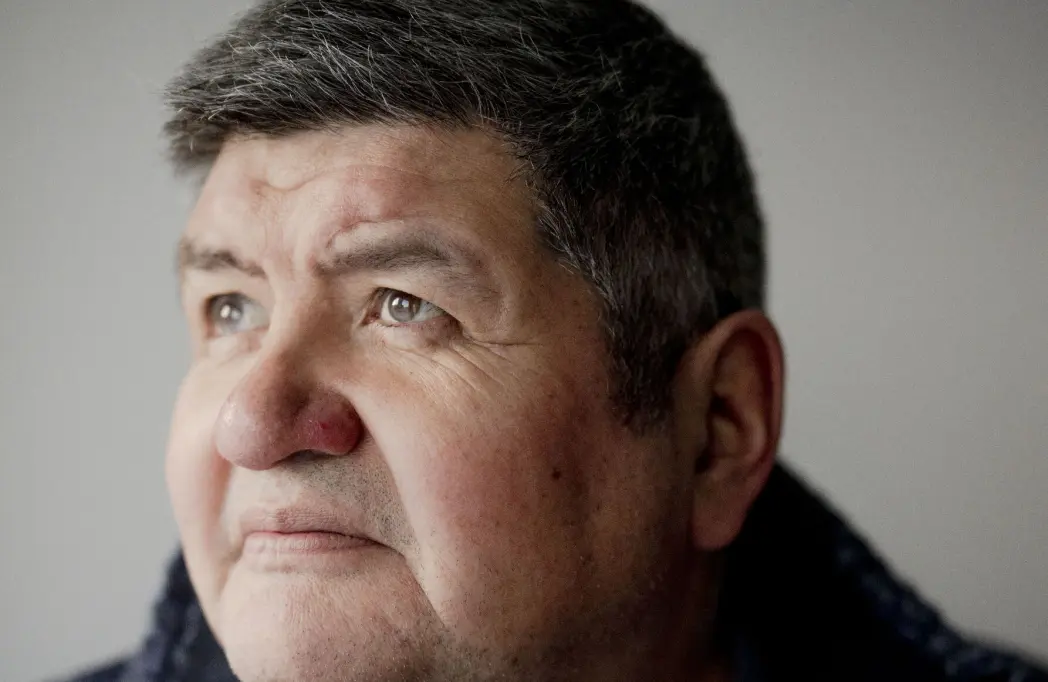
He still feels it when he talks about it.
Not the pain – it has settled like a shadow that no longer moves – but the waiting. The slow, almost cool feeling of being put on hold while the world continues around you.
It began with a fatigue that did not resemble ordinary tiredness. A lethargy that settled in Justus Hansen’s body and would not leave it. In Tasiilaq there are no scanners; you take blood tests and hope that the numbers tell a story that you can act on. But the numbers kept being wrong. The infection numbers were too high. The white blood cells too. First a course of penicillin, then new tests – and still the same unease under the numbers.
- The feeling in the body was wrong, and the numbers in the blood tests kept pointing in a direction that no one really wanted to say out loud, comes quietly from the Democrats' man in Tasiilaq.
Fortunately for Justus, the doctors agreed that he should go to Nuuk, where he had a CT scan. Until then, the fatigue had been diffuse, something you could talk about. Now it got a name. Tumor. The word hung in the room, as if the air changed weight.
- Just hearing the word tumor and cancer, Justus Hansen says quietly and continues in the same tone:
- My world burned down.
The scans showed a 14 x 14 centimeter nodule near the liver and the right adrenal gland. But even with the black and white pictures, no clarity followed. Instead, the months began to slip by in conferences, referrals, and new assessments. Four doctors. Four orders. Three months, where he lived in a no-man's land between hope and farewell - without knowing which side he was on.
It was during that period that another kind of waiting emerged. Not the medical one, but the administrative one. In Nuuk, he lived privately and not at the patient hotel, and therefore he sometimes missed the regular meetings, where the patients were allocated and prioritized.
- They forgot about me. At least that was my feeling, he says soberly.
He says it without anger, more as an observation. That's why he started showing up. Twice a day. At ten o'clock. At two o'clock.
- I just stood there and said: "Hello - I'm still here."
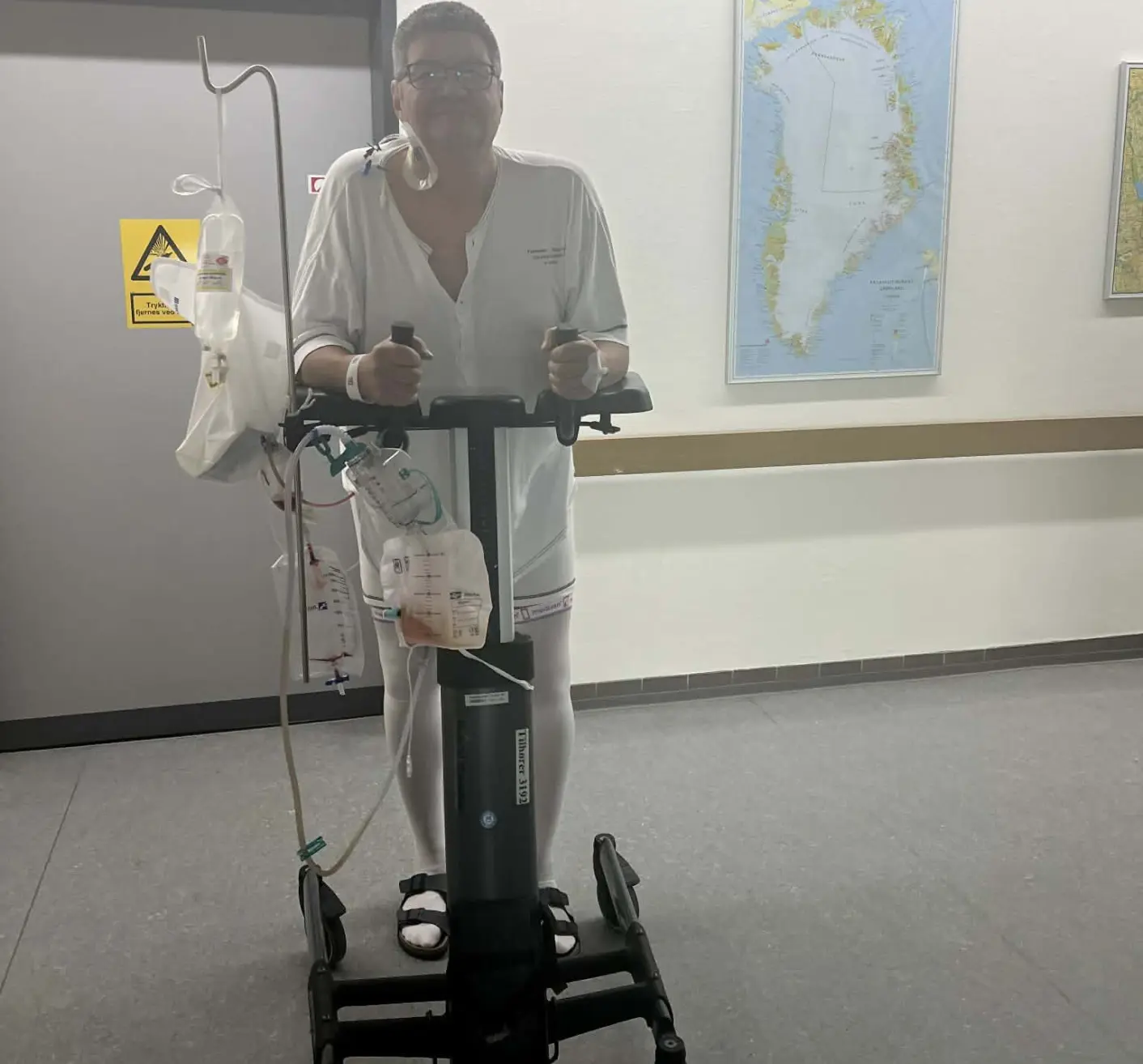
Finally, I was referred to Rigshospitalet, where I quickly got on the operating table. The operation lasted six to seven hours. The surgeons opened from the sternum to the navel and across the side. When they removed the tumor, it had grown further.
But even though the operation was violent, it was the days afterwards that really stuck with him. His body didn't respond as it should. He was taken for X-rays every four hours. The lights in the ceiling flashed by in repeated sequences. His weight dropped. Time was measured in critical intervals of 24 and 48 hours.
- You lose a bit of control over yourself, he says.
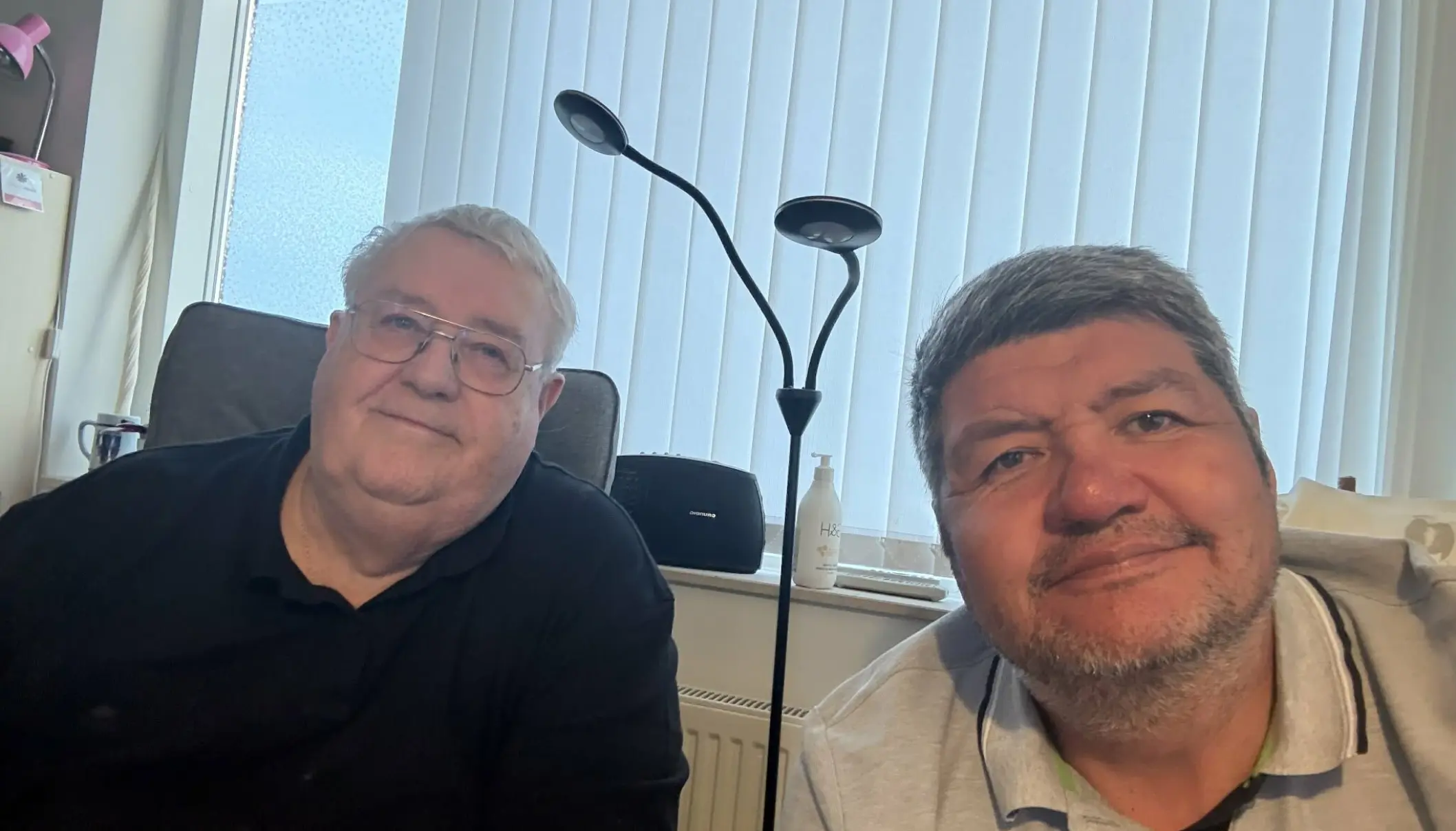
However, it wasn't the incision itself or the complications that hit him the hardest. It was the moment afterwards when he experienced that the roles in the family had been reversed.
- It was borderline overwhelming that my own son was driving me around in a wheelchair.
He says it quietly. Because the disease taught him not only something about the body, but also about distances.
There are no scanners in Tasiilaq. Only blood tests and waiting times. He himself insisted on being sent on, showed up in Nuuk and reminded the system that he was still there.
- If I hadn't been there...
- Then I don't know how much time would have passed.
For Justus, it became a form of visual education in what he has been fighting for years: that conditions should not depend on whether you live in a big city or whether you have the strength to knock on the right doors. Inequality in Greenland is not just a number in a report. It has a geography. And it is felt in the body.
The fjord as a school
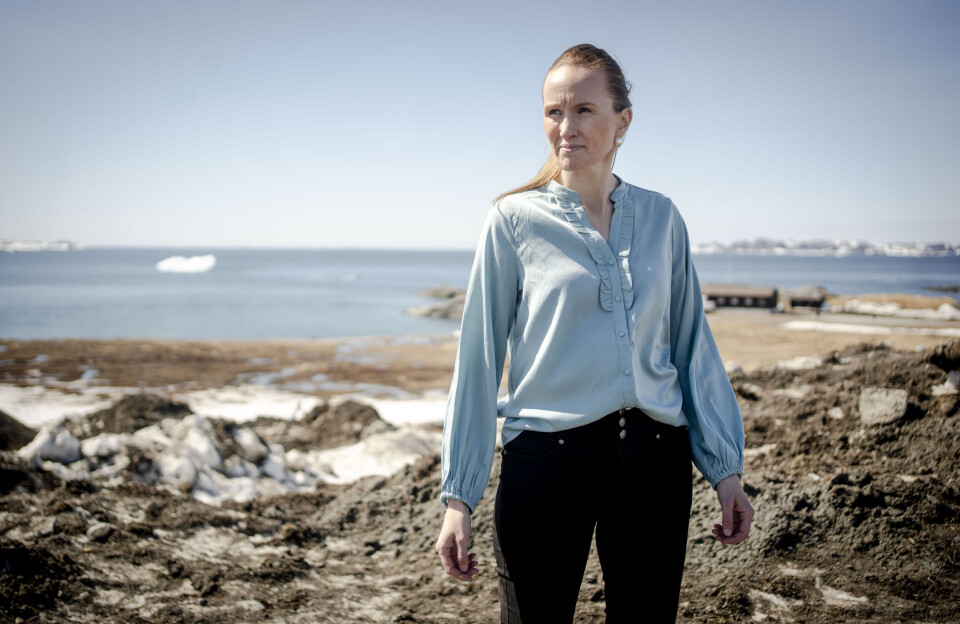
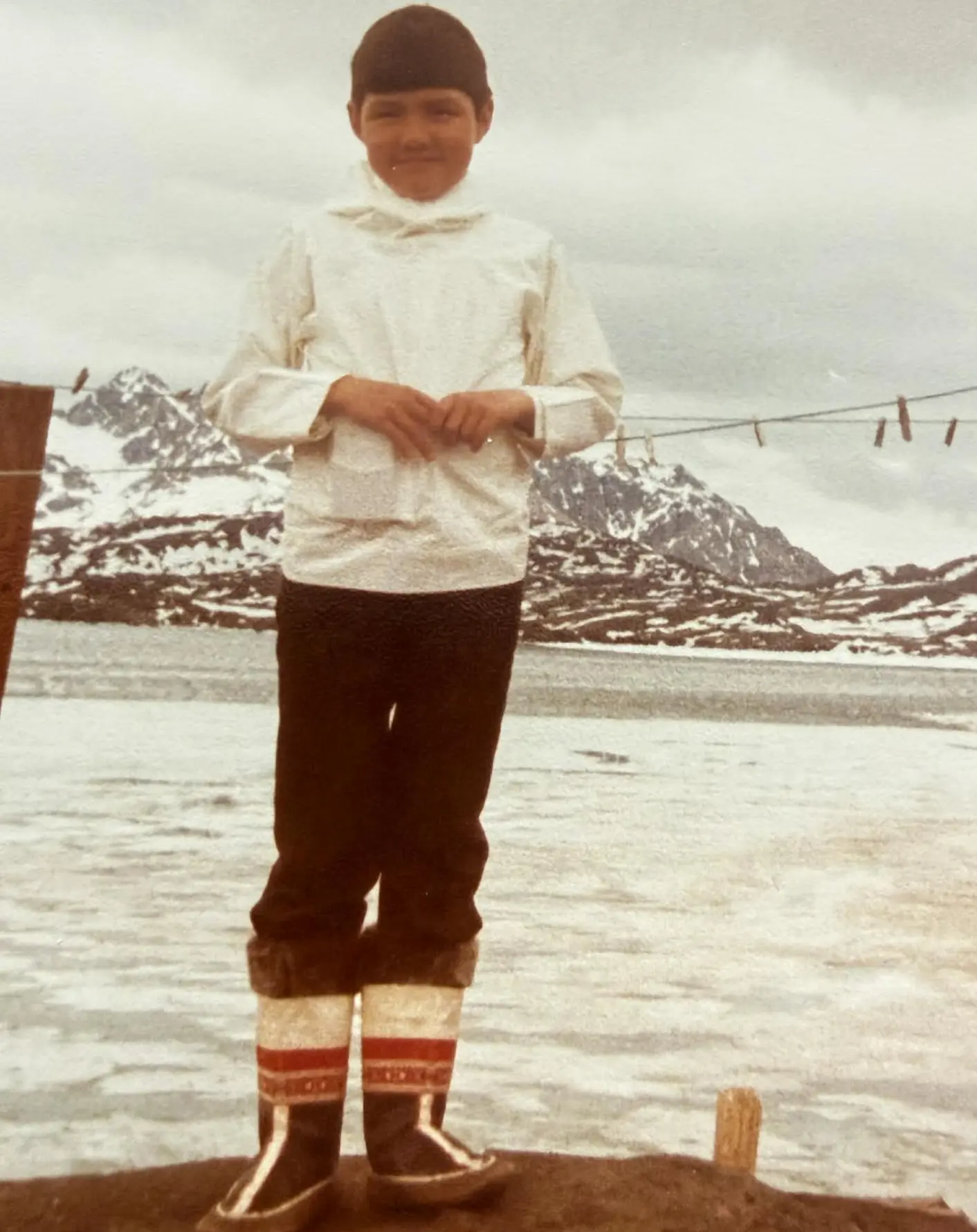
When Justus Hansen starts talking about his childhood in Tasiilaq, you can hear it in him. His voice becomes brighter, his pace a little quicker, as if the memories are still moving with the wind from the fjord. The landscape appears between the sentences – the water, the boats, the light – and with it a childhood where freedom and responsibility were closely linked.
- We could entertain ourselves. We went for walks or sailed, he says.
It was a childhood where the world did not come through a screen, but through wind in the face and salt water on the hands – and where freedom was always followed by a responsibility that one learned to bear early.
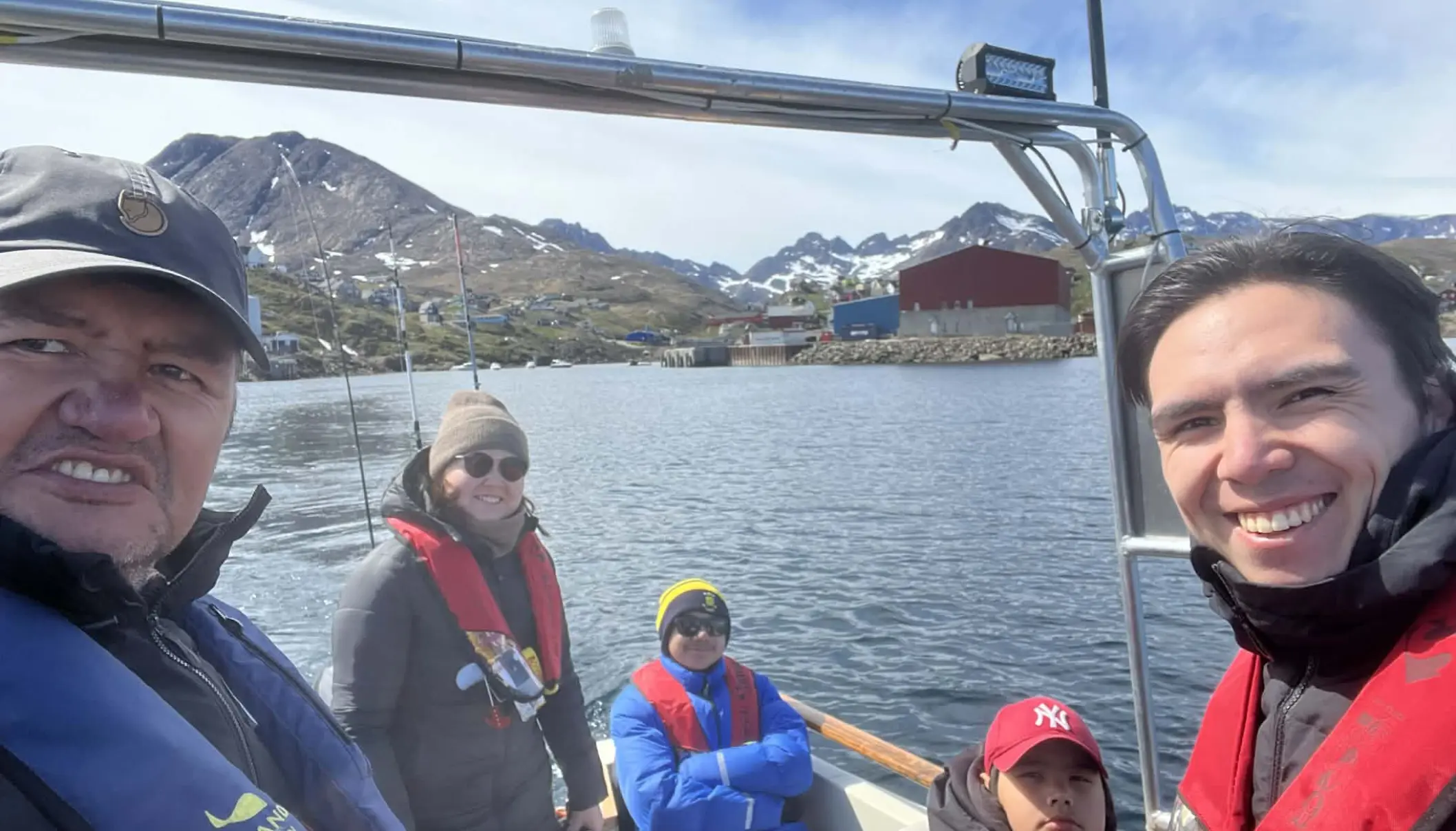
When he was 12, he sailed alone into the fjord in his uncle’s boat. There were cod in the water and summer days when he and a cousin fished, cut and prepared for sale. They earned money, but learned something else at the same time – about work, rhythm and community. It was not called education, but that is what you would probably call it today.
The work continued on land. His father was a Danish master carpenter, and at home, hammers and nails were as natural as schoolbooks. They built their own house in Tasiilaq, and Justus carried materials, stood on the roof with cardboard nails and learned how a wall goes up and a home takes shape.
- Since I was very little, I have always worked during the summer holidays, he says.
When he compares with today, he does so without romanticizing it. Children in Tasiilaq live in a different reality now – with the internet, telephones and much greater access to the outside world. Freedom is different, but also more supervised, less physical.
- It is difficult these days, he says about getting young people to take summer jobs.
- It's not easy.
Yet there is a pride behind the words. An awareness of coming from a place where you learned to make do with what you had – and precisely learned to make something grow out of almost nothing.
Duality as a driving force
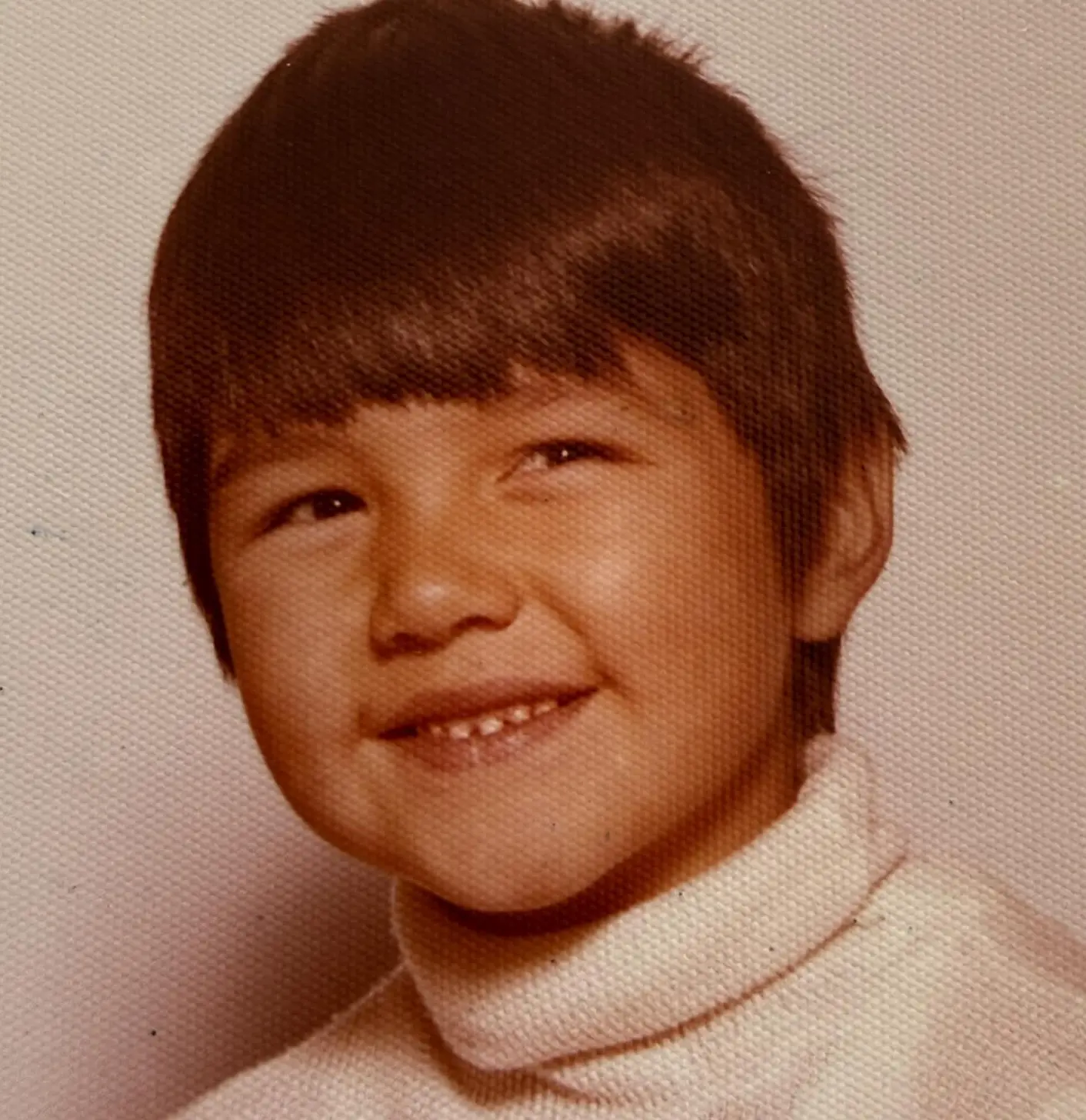
Justus was born in 1968. Danish father. Greenlandic mother. Already as a child he noticed that identity is not just something you say, but something that can be embedded in the body when others point.
- I went to the extended class, where the majority of the students had a Danish background, he explains.
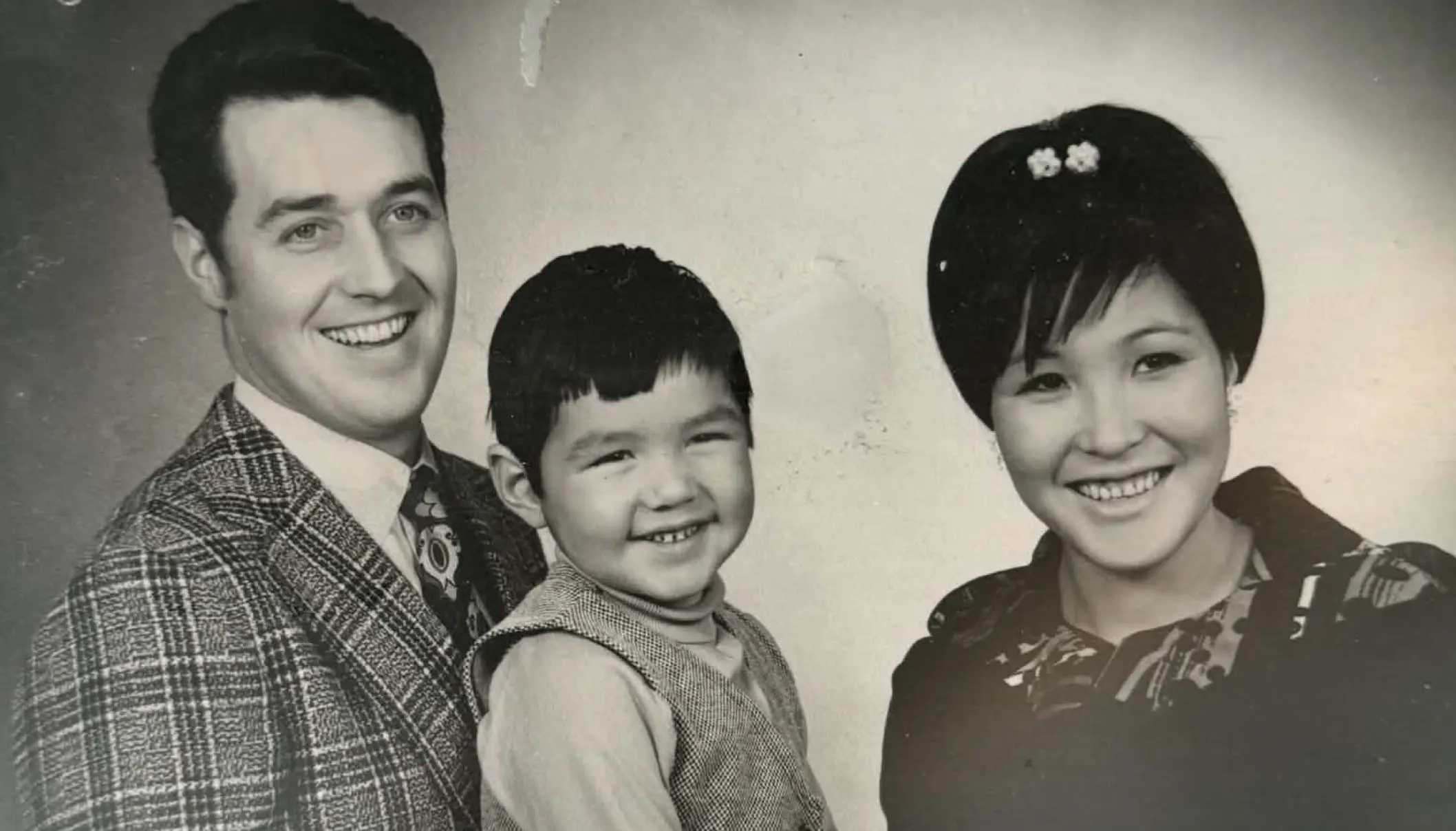
There were stares and teasing in the schoolyard, episodes he does not want to dramatize, but does not want to trivialize either.
- There was always someone to poke you. I was raised fighting for my rights.
At the same time, he emphasizes that East Greenland has historically had to be more open to those who came from outside. Teachers, telegraph operators and merchants were part of everyday life, and diversity was not a choice, but a prerequisite.
- We have to embrace what comes from outside and helps our society.
That does not mean that everything was harmonious, but the duality did not become the same hard dividing line that many have experienced elsewhere. Yet another experience emerged: the feeling that the east was always a bit on the edge of what was decided in the west.
- When you sit over there and feel isolated, it is easy to point towards the west, he says.
That feeling – of being far from the decisions and close to the consequences – settled in him early on and later became a political driving force for him. Not as anger, but as a will to ensure that East Greenland is not only mentioned, but also heard.
In 1982 – when he was 14 and newly confirmed – the family moved to Denmark permanently. It was not until October 1993 that he returned to Tasiilaq. In the intervening years, he trained as a mechanic and threw himself wholeheartedly into handball, where he was a goalie in Sengeløse, Høje Taastrup and Valby.
One day, the national coach at the time, Leif Mikkelsen, was standing on the sidelines. He had noticed Justus' mobility in goal and asked if he would like to play for the top Copenhagen club, Ajax.
- I was flattered. It was a huge recognition, he says.
Still, he said no. Community meant more than ambition. Later he regretted that he did not take the chance.
- I could always have tried myself.
He brought that experience with him when the Democrats asked if he would run as a candidate. This time he said yes.
- The opportunity had to be tested. You can always withdraw again, comes from one of the experienced members of the Democrats' county council group.
As you know, he did not. Since 2008 he has been active in politics – either in the municipal council or Inatsisartut.
The voice from the east
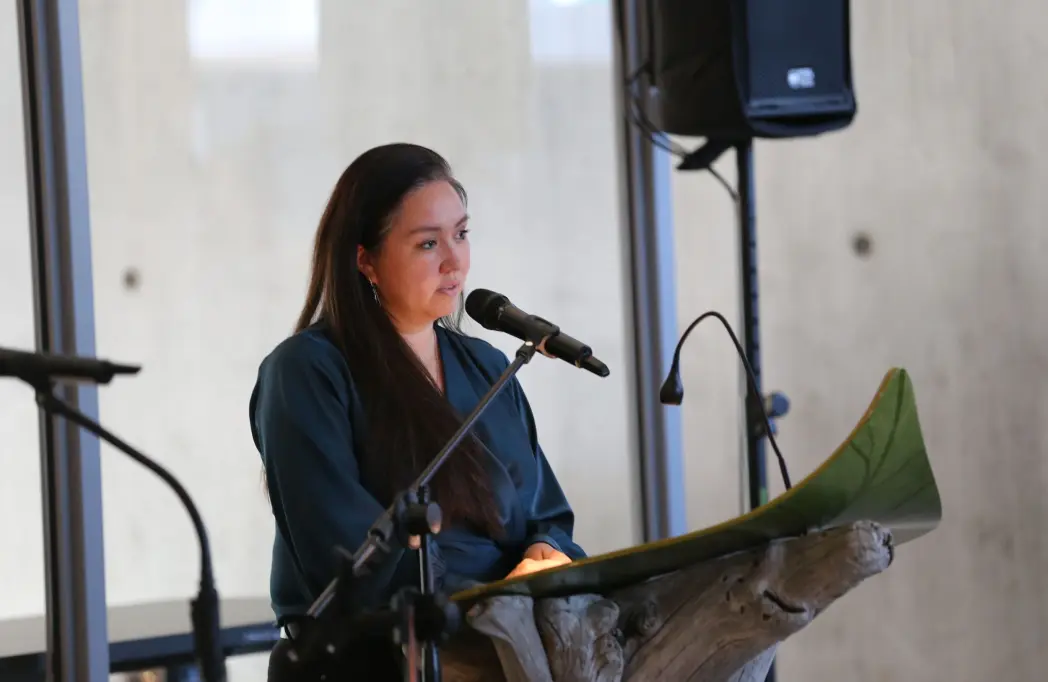
Today, Justus speaks as if he is always on the move – from meeting to meeting, from committee to meeting. But amidst the pace, his mission is the same: to get East Greenland heard.
For him, a large part of the work consists of explaining the conditions back home to his political colleagues, who have rarely been in them themselves.
- Many of them don't really know it, he says.
It's not about creating an East-West conflict, he emphasizes, but about balancing differences. In a country where decisions are often made in the larger cities, the East risks becoming a place where people have opinions – without knowing the everyday life.
He points to the language as an example. When his children went to GUX in Sisimiut, they were told not to speak East Greenlandic in the city.
- So, what the hell, he exclaims and adds:
- These are the kinds of things we struggle with as East Greenlanders.
At the same time, students in the East have to learn West Greenlandic in elementary school, while the other way around, that is, West Greenlanders have to be introduced to the East Greenlandic language, is not the case.
- It is not dramatic in itself, he says, but it says something about the direction the adjustment is taking.
According to him, there are also the special restrictions in the outer districts, including the alcohol ban, which according to him rests on an assumption that people “cannot control themselves”. The problems are found everywhere in Greenland, he points out, but the stamping hits certain postal codes harder than others.
- As soon as it says 3913 (Tasiilaq, ed.), the media is ready, he thinks
- It sends a signal that we are viewed through a certain lens.
The accounting of absence
There is a price for representing a place that is far from the center of power. It is paid not only in travel hours, but in absence.
Justus has tried to consolidate the meetings, plan better, squeeze the calendar so that he can be home more. Still, the calculation ends up being high.
- It has been a little over six months since I have been in Tasiilaq, he says.
That means birthdays that he does not attend. Anniversaries that he follows from a distance. An everyday life where you can see the layer cake in a picture, but not smell it.
- Just being able to keep up on Facebook or FaceTime … it is challenging.
He and his wife have been together for 27 years, he says, and every time he runs again, she is asked if it's okay.
- She also knows that my heart is passionate about politics.
Three of the children now live in Nuuk, the youngest is in post-secondary school in Denmark. And he acknowledges that a life in politics can slowly shift one's center of gravity without you fully realizing it.
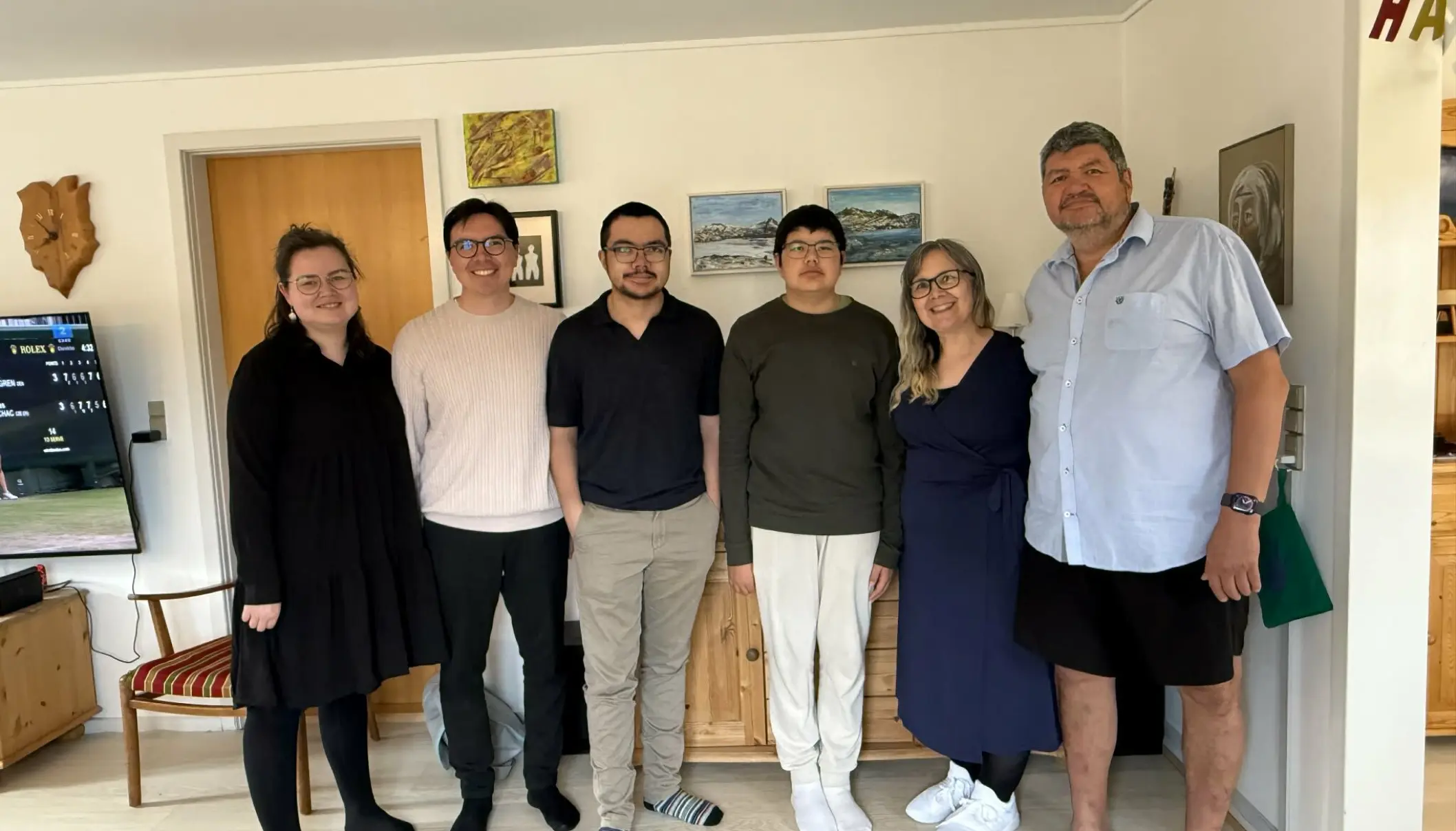
And on top of it all, the disease lies like a quiet background tone – the checks, the travels, the little mental alarm bells that can ring without warning.
Dreams must be lived now
With the disease, he has learned the hard way to measure life in intervals. Three months. Next scan at Rigshospitalet in Copenhagen. Next meeting in Nuuk. Next flight to a Nordic city holding a Nordic Council session. Next meeting … and next goodbye. And so on.
And yet, he says, he tries to live the opposite: not to postpone one's dreams just because the calendar is full.
- Time should not stand in the way of my dreams. When the opportunities are there, I will take them.
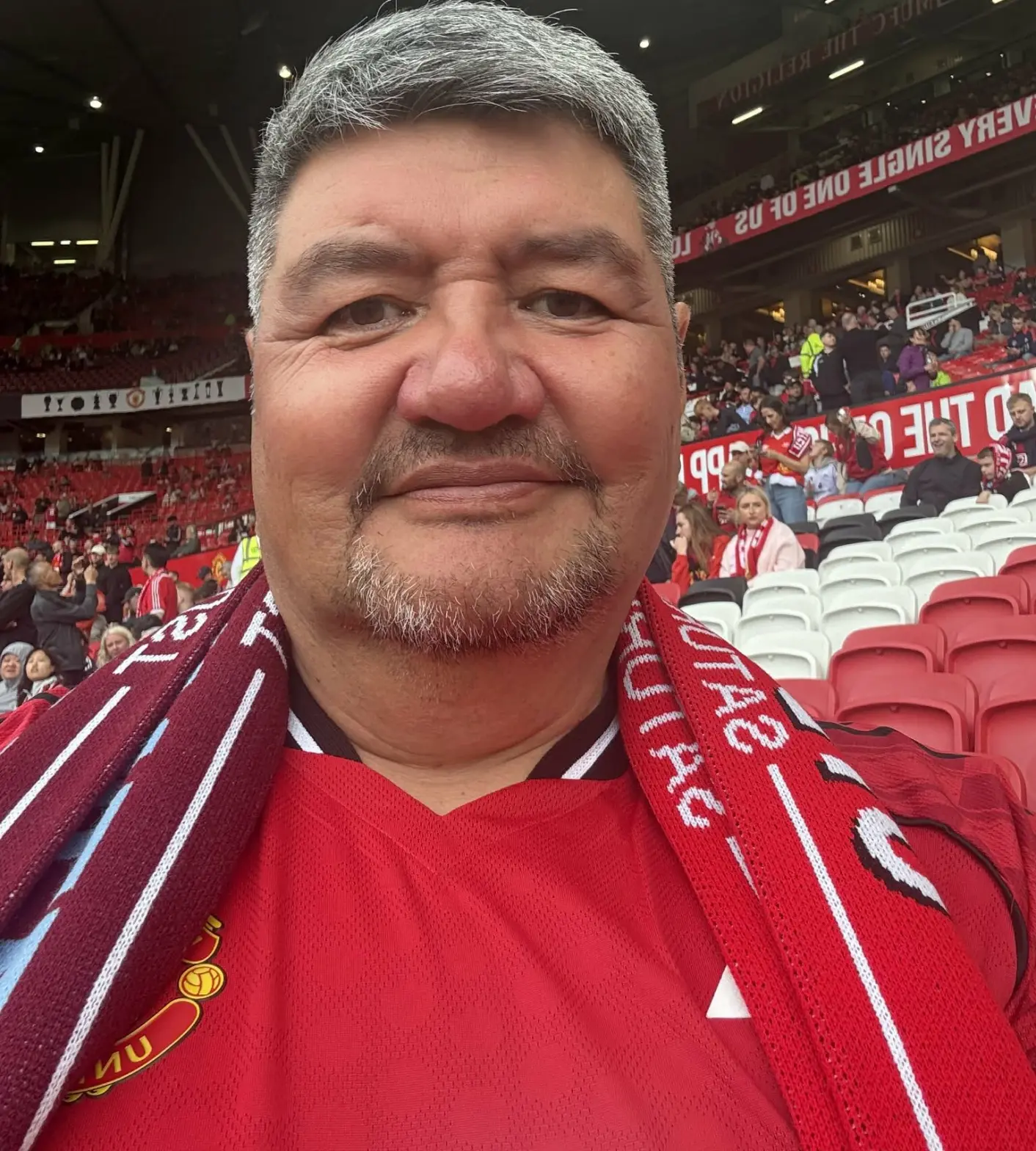
Perhaps that is also why he went to Old Trafford with a friend in the autumn to watch his team, Manchester United. A dream he has carried with him for almost 50 years, since he became a fan of the red-shirted devils as a boy.
He remembers the moment when he walked through the tunnel and out onto the famous green – not as a player, but as a spectator.
- I must admit that I cried like a little child when I walked through the tunnel and saw the huge stands. It was really special, he says, after having seen the Theatre of Dreams, as Old Trafford is also called, so many times on TV.
At the end of the conversation via Messenger, the sound drops out, and suddenly I hear Justus' voice again:
- Hello, he says and adds:
- I'm still here.
That is perhaps also the sentence that best explains his politics. Not as an ideology, but as an insistence that East Greenland is not just a postcode. Not just a story in the media - or somewhere on the edge. Here are people with families who speak their language,
And a man who is packing his suitcase again – not because he doesn't want to be home, but because he still believes that home can be heard.
Abonnementer
Sermitsiaq.gl - web artikler
- Adgang til alle artikler på Sermitsiaq.gl
- Pr. måned kr. 59.00
- Pr. år kr. 650.00
Sermitsiaq - E-avis
- Adgang til Sermitsiaq e-avis som udkommer hver fredag
- Adgang til alle artikler på Sermitsiaq.gl
- Pris pr. måned kr. 191
- Pris pr. år kr. 1.677
AG - Atuagagdliutit E-avis
- Adgang til AG - Atuagagdliutit e-avis som udkommer hver onsdag
- Adgang til alle artikler på Sermitsiaq.gl
- Pris pr. måned kr. 191
- Pris pr. år kr. 1.677
Sermitsiaq.AG+
- Adgang til AG - Atuagagdliutit e-avis som udkommer hver onsdag
- Adgang til Sermitsiaq e-avis som udkommer hver fredag
- Adgang til alle artikler på Sermitsiaq.gl
- Adgang til Arnanut e-magasin
- Adgang til Nutserisoq.gl
- Ved interesse send en mail til abonnement@sermitsiaq.gl
Kære Læser, Velkommen til Sermitsiaq.gl – din kilde til nyheder og kritisk journalistik fra Grønland. For at kunne fortsætte vores vigtige arbejde med at fremme den frie presse og levere dybdegående, kritisk journalistik, har vi indført betaling for udvalgte artikler. Dette tiltag hjælper os med at sikre kvaliteten af vores indhold og støtte vores dygtige journalister i deres arbejde med at bringe de vigtigste historier frem i lyset. Du kan få adgang til betalingsartiklerne fra kun kr. 59,- pr. måned. Det er nemt og enkelt at købe adgang – klik nedenfor for at komme i gang og få fuld adgang til vores eksklusive indhold. Tak for din forståelse og støtte. Dit bidrag hjælper os med at fortsætte vores mission om at levere uafhængig og kritisk journalistik til Grønland.