The Greenland Government wants to create better conditions for the fishing industry, and is working to optimize the exploitation of living resources. However, sustainable exploitation and international agreements must be taken into account.
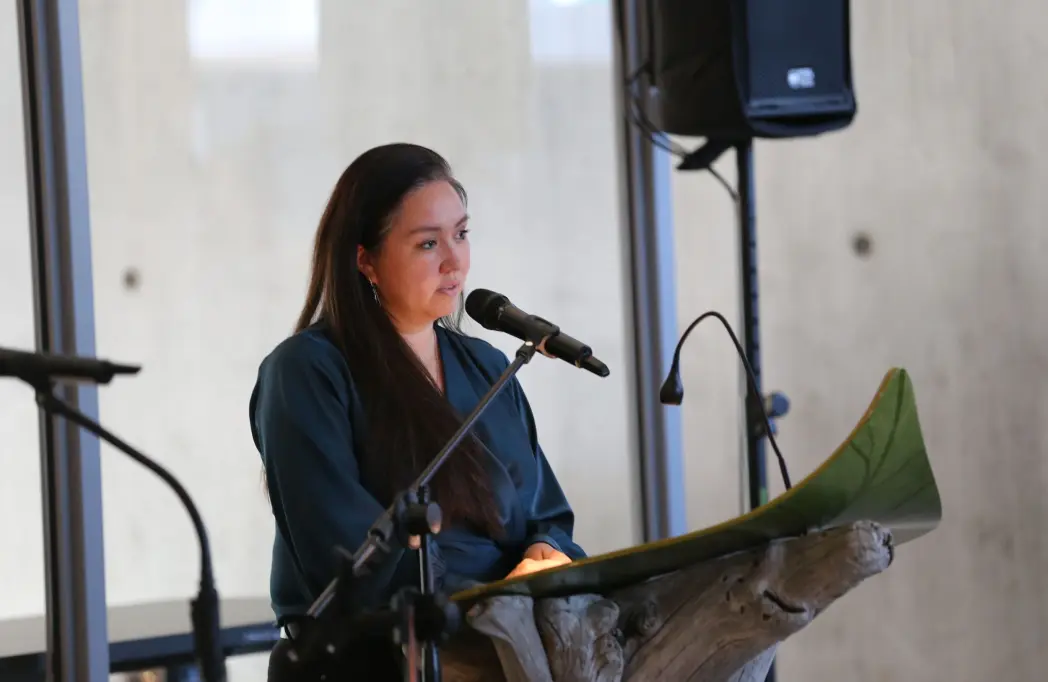
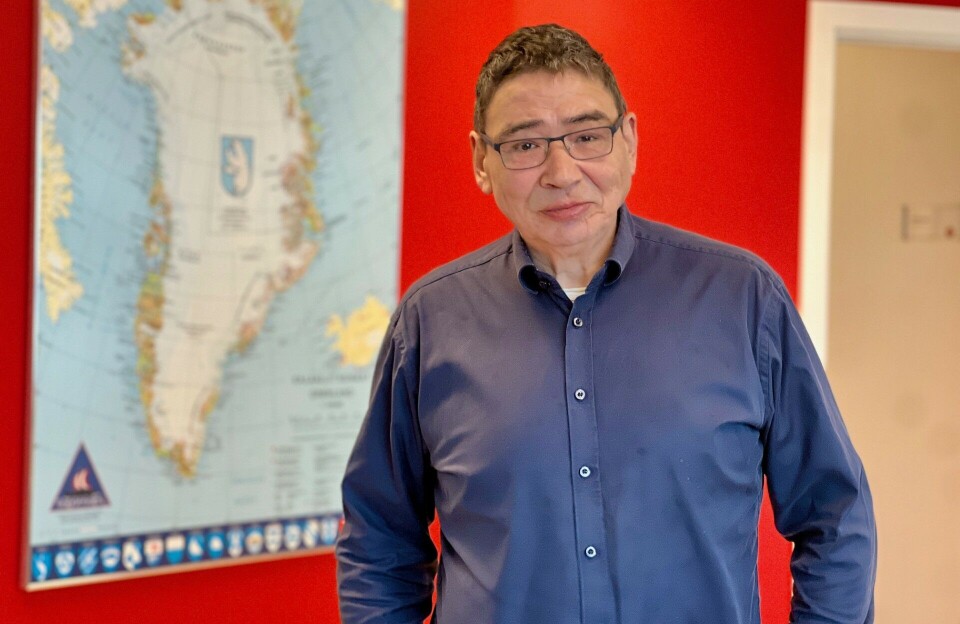
This is what Peter Borg, Demokraatit, who is Naalakkersuisoq for Fisheries, Hunting, Agriculture and Self-Sustainability, writes in a reply note to Mette Arqe-Hammeken, Naleraq, who is a member of Inatsisartut, who according to paragraph 37 questions wants to get answers to the current fishing situation.
The Inatsisartut member who comes from Ittoqqortoormiit, is already preparing several questions that she wants to have elaborated on in the coming time.
Taking into account agreements
According to the information from Peter Borg, there were 2,080 people with paid commercial fishing certificates in Greenland in 2025. However, it is still unknown how many commercial fishing certificates there are this year, as the application process is still ongoing.
He states that Naalakkersuisut is working to optimize the utilization of living resources, taking into account the long-term conservation of resources in accordance with the Inatsisartutlov on hunting and trapping and international agreements and conventions.
- The purpose is to ensure an appropriate and biologically sound utilization of the trapping resources.
- An important prerequisite for ensuring the conservation and reproduction of the trapping resources is to collect knowledge about the well-being and reproduction of the species and manage them based on this knowledge.
- If the utilization of a species or a population exceeds the population's reproduction, there may be a need to introduce quotas for the species so that the utilization becomes sustainable, says Naalakkersuisut for Hunting.
Quotas are set based on biological advice, public consultation processes and Naalakkersuisut's policy on the possibility of meat supply in certain areas. The response note also states that quotas are sometimes set even though there is no biological advice, as is the case with narwhals in East Greenland.
Agreements and strict regulations
The response note to Mette Arqe-Hammeken describes, among other things, that Greenland is covered by Denmark's membership of the United Nations (UN) and, as a member of Article 65 of the Convention on the Law of the Sea, is obliged to sustainable exploitation, research and joint management of, among other things, marine mammals.
Greenland is also a member of the International Whaling Commission (IWC), which prohibits the commercial sale of products from large whales and sets annual quotas for the catch of these.
Greenland is also a member of the North Atlantic Marine Mammal Commission (NAMMCO), which provides biological advice on seals, walruses, small and large whales.
In addition, Greenland shares several quota species with neighboring countries, where there are joint management agreements such as the Memorandum of Understanding (MoU), which is a bilateral agreement with Canada / Nunavut on joint management of beluga and narwhals in Baffin Bay, and the Commission of Narwhal and Beluga JCNB). Greenland is also a member of the Washington Convention (CITES) under the UN umbrella, where Greenland is obliged to follow the convention's provisions on international trade and transport of endangered animal and plant species.
Peter Borg states that the Greenland Institute of Natural Resources functions as a scientific CITES authority in Greenland, where, among other things, it assesses whether sustainability declarations (Non Ditriement Finding, NDF) can be issued, which is a prerequisite for granting export permits for species covered by CITES. If a species cannot meet the requirements of the sustainability declarations, Greenland is therefore obliged to introduce a temporary export ban for the species in question.
- Since Greenland is a member of CITES through Denmark, Greenland is thus also subject to very strict provisions for reopening export bans. However, a limited shipment of minke whales from West Greenland to Greenlanders residing in Denmark can take place when the conditions are met.
- The possibilities of achieving export income from endangered species therefore depend on whether the catch of the species is assessed to be sustainable and whether there are any import restrictions in the recipient country, says Peter Borg.
Biodiversity strategy
The first biodiversity strategy in Greenland, which, among other things, aims to protect biodiversity through relevant legislation and sustainable management, was adopted in 2021.
Peter Borg writes that all countries are obliged to prepare a national biodiversity strategy in accordance with the Convention on Biological Diversity (CBD) under the United Nations (UN).
Best framework
Mette Arqe-Hammeken also wants to know what plans Naalakkersuisut has to create schemes that can give trappers better income opportunities from the sale of polar bear skins and narwhal tusks.
Peter Borg emphasizes that a sustainability assessment of narwhals cannot be obtained, which is why Greenland is obliged to temporarily halt exports of the species.
- Last year, a new sustainability assessment for polar bears was published, and Naalakkersuisut will work to ensure that polar bear skins, teeth and claws can once again be exported.
- It is Naalakkersuisut's task to create the best framework for trappers to make an economic profit from polar bear skins, says Peter Borg.
However, there are a number of conditions, including controls, that must be put in place before this can be started, as stated in the response note.
Initiatives
The Greenlandic Government has started a number of initiatives to develop fishing and trapping in various locations, for example in East Greenland, where Royal Greenland opened a fish factory that primarily receives cod and halibut in Tasiilaq in August 2024.
The Ministry of Fisheries and Hunting, Agriculture and Self-Sustainability has also provided funds for a closer study of polar bears in Southeast Greenland and South Greenland.
Re-establishment support
Commercial fishermen, commercial trappers and agricultural farmers can apply for re-establishment support from the Greenlandic Government if their earning potential is limited due to climatic constraints.
According to Emanuel Rosing, Head of Department in the Department of Fisheries and Hunting in the Self-Government, 501 applications were received in 2025 for either restoration support or grants related to climate change. Of these, 118 applicants were approved. 44 fishermen and hunters received restoration support, while 74 were approved for support due to climate change. The total grant of 3.1 million kroner for 2025 has thus been fully utilized.
Mette Arqe-Hammeken says that she is satisfied with the response note from Naalakkersuisoq for Fisheries, Hunting, Agriculture and Self-Sustainability, which has given her greater insight into the current situation of hunters, which she believes is under pressure on several fronts. But according to her, it has also given rise to several questions, which is why she is now in the process of preparing a new paragraph-37 question on the subject.
Abonnementer
Sermitsiaq.gl - web artikler
- Adgang til alle artikler på Sermitsiaq.gl
- Pr. måned kr. 59.00
- Pr. år kr. 650.00
Sermitsiaq - E-avis
- Adgang til Sermitsiaq e-avis som udkommer hver fredag
- Adgang til alle artikler på Sermitsiaq.gl
- Pris pr. måned kr. 191
- Pris pr. år kr. 1.677
AG - Atuagagdliutit E-avis
- Adgang til AG - Atuagagdliutit e-avis som udkommer hver onsdag
- Adgang til alle artikler på Sermitsiaq.gl
- Pris pr. måned kr. 191
- Pris pr. år kr. 1.677
Sermitsiaq.AG+
- Adgang til AG - Atuagagdliutit e-avis som udkommer hver onsdag
- Adgang til Sermitsiaq e-avis som udkommer hver fredag
- Adgang til alle artikler på Sermitsiaq.gl
- Adgang til Arnanut e-magasin
- Adgang til Nutserisoq.gl
- Ved interesse send en mail til abonnement@sermitsiaq.gl
Kære Læser, Velkommen til Sermitsiaq.gl – din kilde til nyheder og kritisk journalistik fra Grønland. For at kunne fortsætte vores vigtige arbejde med at fremme den frie presse og levere dybdegående, kritisk journalistik, har vi indført betaling for udvalgte artikler. Dette tiltag hjælper os med at sikre kvaliteten af vores indhold og støtte vores dygtige journalister i deres arbejde med at bringe de vigtigste historier frem i lyset. Du kan få adgang til betalingsartiklerne fra kun kr. 59,- pr. måned. Det er nemt og enkelt at købe adgang – klik nedenfor for at komme i gang og få fuld adgang til vores eksklusive indhold. Tak for din forståelse og støtte. Dit bidrag hjælper os med at fortsætte vores mission om at levere uafhængig og kritisk journalistik til Grønland.