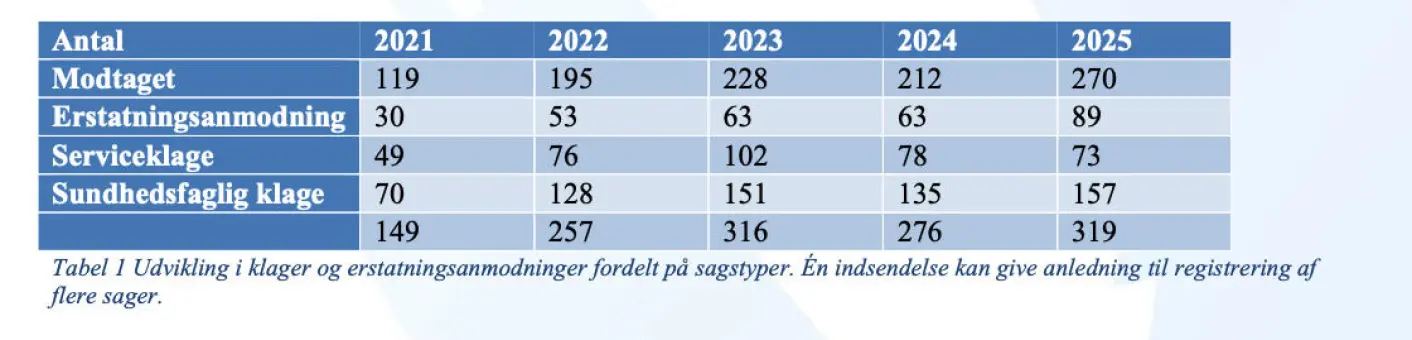
The number of complaints and compensation requests in the Greenlandic healthcare system is growing rapidly. New figures for 2025 show an increase of 58 received complaints and compensation requests compared to the previous year.
Since 2021, when 119 cases were received, the number has increased to 270 in 2025. This is more than a doubling in just four years. The inquiries concern all parts of the healthcare system, but are most frequently seen at the larger treatment facilities.
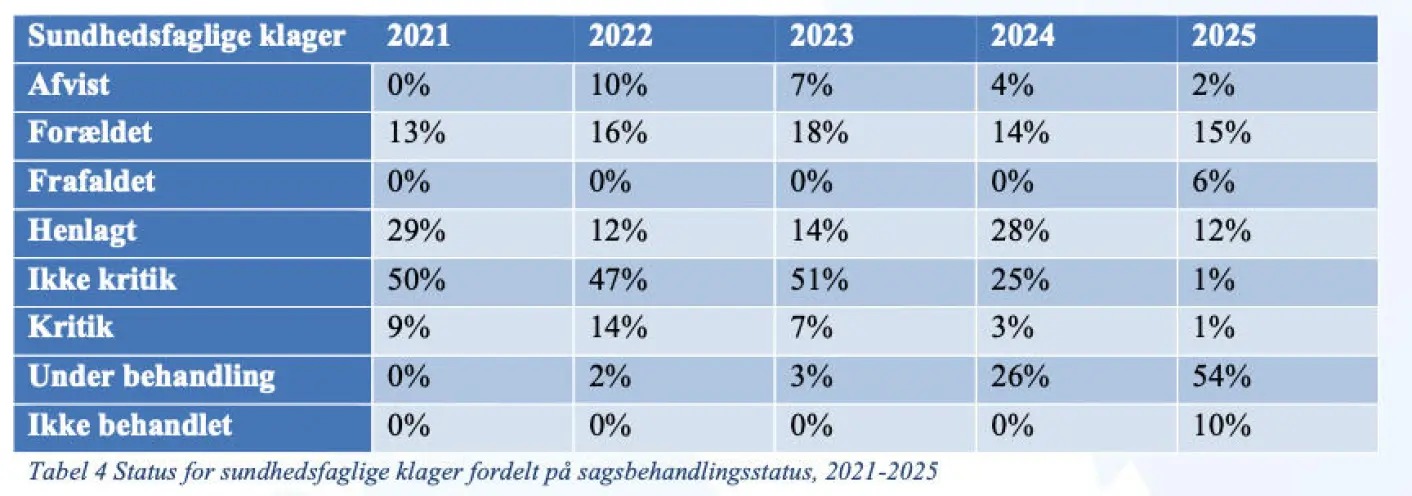
When it comes to healthcare complaints, around one in ten cases leads to criticism. This means that in these cases, the authorities confirm that an error has occurred that should not have occurred.
The criticism is spread across several different treatment sites and professional groups. However, in the vast majority of cases – in fact, around nine out of 10 – the healthcare complaints end without criticism.
In these cases, the authorities assess that the treatment has met professional standards and applicable regulations, after which the cases are closed.
Criticism and compensation
A statement of criticism is the authorities' official statement that the healthcare system has not performed its task adequately. The Danish Patient Complaints Board makes the decision after an assessment of whether the treatment has been below the norm of generally recognized professional standards or in violation of the patient's rights.
Although the criticism is directed at a specific incident, it also serves as a learning tool so that treatment facilities can avoid similar mistakes in the future. However, it is important to note that a decision on criticism does not automatically trigger financial compensation, as compensation is assessed in a separate track of the Patient Compensation, the annual report states.
Strong increase in compensation requests
The area of compensation requests has experienced a particularly marked development with an increase from 63 cases in 2024 to 89 in 2025. Looking at the period from 2021 to 2025, the number of compensation cases has almost tripled.
The increase in compensation requests should be seen in light of the fact that the Inatsisartutlov on patients' right to complain and compensation in Greenland entered into force on 14 February 2025.
The processing of a compensation request is carried out independently of any complaint case. In practice, this means that a patient can be awarded financial compensation for an injury, even if the healthcare authorities consider that the treatment itself does not give rise to official criticism.
Service complaints and new dialogue opportunities
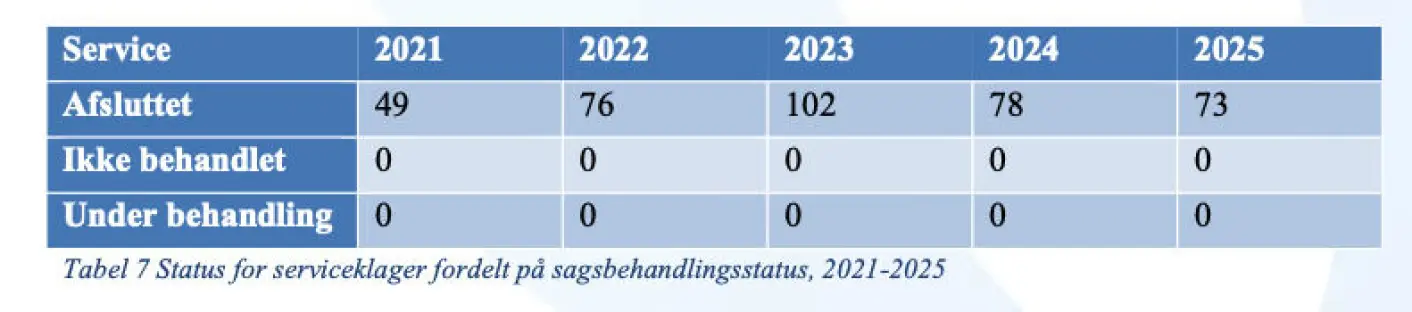
In contrast to the other areas, the number of service complaints has decreased slightly, from 78 reports in 2024 to 73 in 2025.
A service complaint is not about the medical treatment, but about conditions such as long waiting times, poor communication or the staff's behavior.
When the complaint case has been processed and criticism has been found, the message is sent to the management of the Greenlandic healthcare system, who are tasked with correcting the criticism.
New legislation shifts focus to the entire process
With the new complaints and compensation legislation from February 2025, the system has been modernized. A significant change is that healthcare complaints are now treated as process complaints, which look at the entire treatment process rather than the individual employee.
As a new feature, patients have been given the right to a dialogue with the treatment facility. Experience has already shown an effect, as nine complaints have been withdrawn after such a dialogue. At the same time, the system has become more efficient by letting the Patient Compensation Fund in Denmark handle the financial claims, while the National Medical Board has been given expanded powers to quickly reject cases that are outdated or fall outside the scope of the law.
The National Medical Board now functions as a kind of filter that can quickly sort out cases that are too old or do not belong in the system at all. This saves time and ensures that efforts are spent on the right cases.