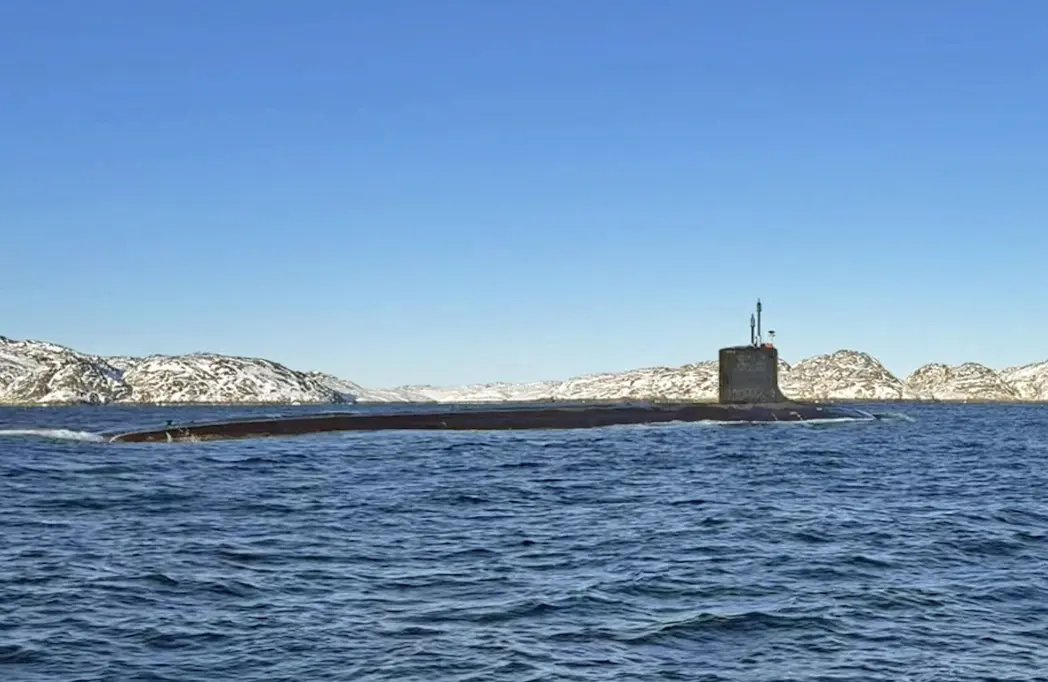
A group of American trophy hunters got an extra hunting experience of the very special kind on Saturday afternoon.
They were aboard Greenland Cruises' tour boat Aviaaja at a position 7 nautical miles west of Nuuk when the American nuclear submarine USS Delaware dived right in front of them – only about 50 meters.
- A large submarine near Nuuk is a bit of a sight to behold, so it was of course taken as an experience by the American hunters, but otherwise everything went smoothly and orderly, says Ivik Knudsen-Ostermann, who owns Greenland Cruises and therefore also Aviaaja.
- The situation was unusual, but also exciting, so a lot of photos were taken – and that was it, explains Ivik Knudsen-Ostermann.
The American submarine had surfaced because a crew member was seriously ill and needed immediate medical attention.
Evacuated to Nuuk
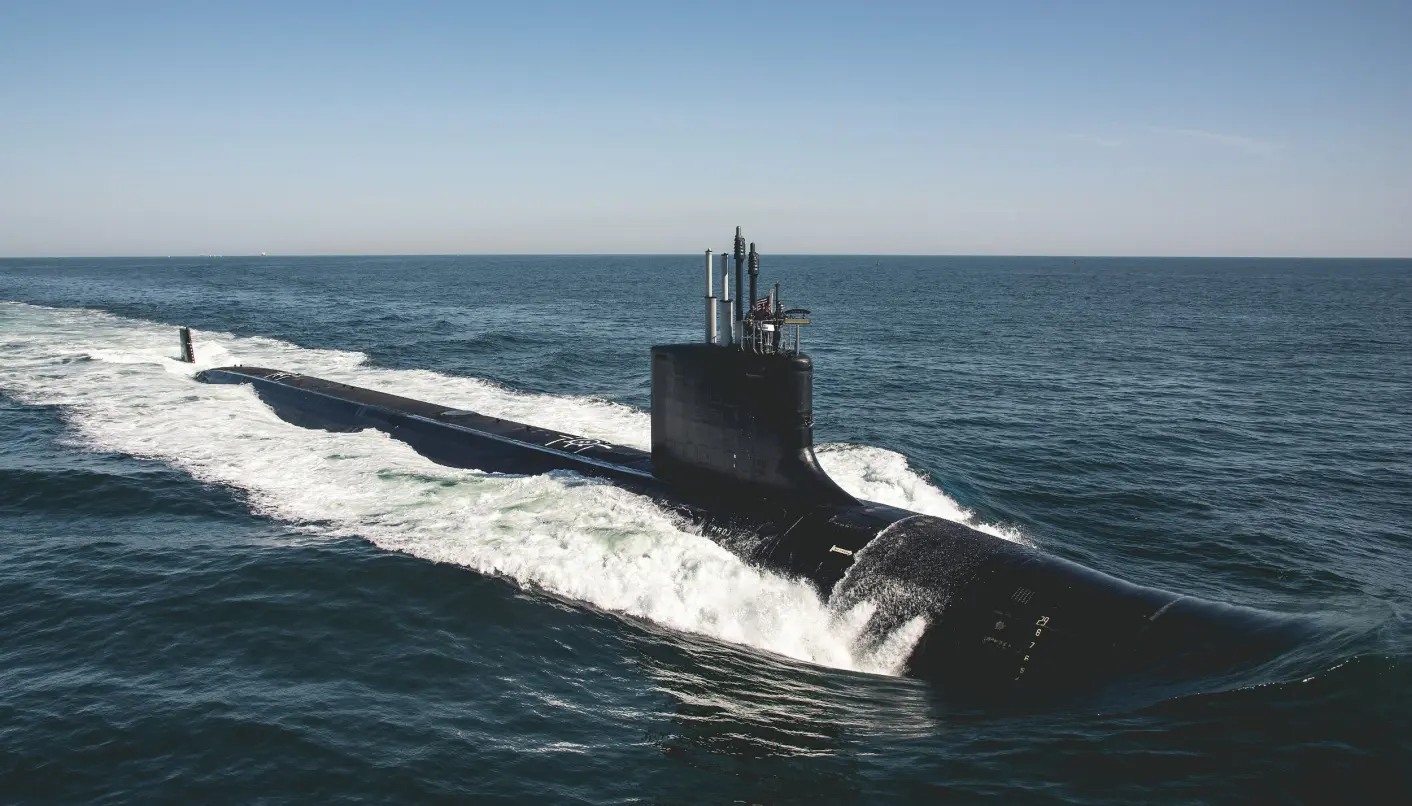
Arctic Command had sent a Seahawk helicopter from the Inspection Ship Vædderen to pick up the patient, who was transferred to Queen Ingrid's Hospital in Nuuk.
The episode has given rise to a great deal of speculation and massive coverage in the world press – not least because US President Trump announced on Sunday night that he would send a hospital ship to Greenland.
It is unknown what the US nuclear submarine was doing off the west coast of Greenland.
- But we know that the US sends a submarine from the Pacific to the Atlantic and back again under the ice at the North Pole twice a year, former Chief Analyst in the Danish Defence Intelligence Service Jacob Kaarsbo tells Sermitsiaq.
- It is routine for the US Navy, so I don't see anything sensational about it. The US needs to train the operation so that in a possible crisis situation they can quickly move submarines from the Pacific to the Atlantic.
International waters
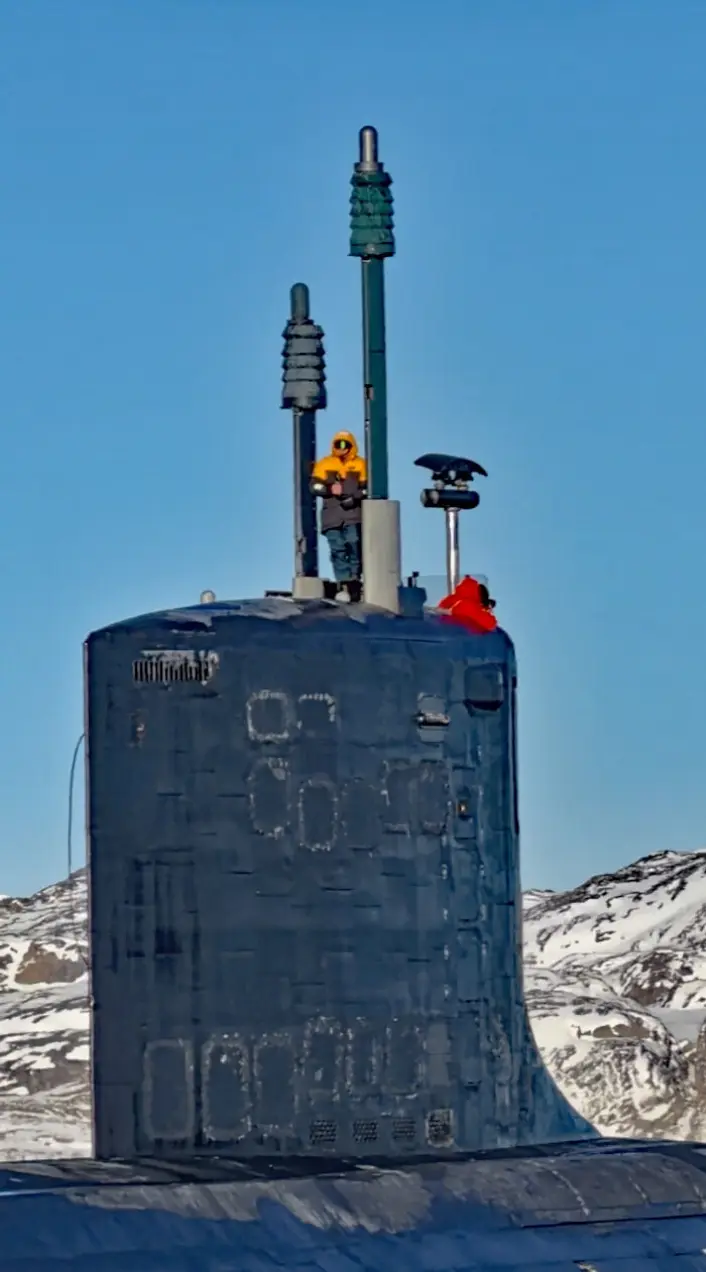
- The trip under the polar ice takes place in international waters, so it is completely according to the rules. So is the evacuation of the US Marine. It is a common practice in maritime navigation to help each other when there is a risk to life – and I am convinced that the USS Delaware entered Greenlandic territorial waters by agreement with the Arctic Command, states Jacob Kaarsbo.
- The evacuation, which went completely according to the book, is unpleasant for Trump, who has repeatedly mocked Denmark for its ability to defend Greenland – and that is certainly the explanation for the strange proposal to send a large hospital ship to Greenland.
- Trump is a master at manipulating the media image – and unfortunately the media jumped on the spin. Instead of the media being flooded with stories about how the Danish defence had saved a crew member on an American submarine, and how the US needs allies to save its soldiers in distress, Trump had the focus on the challenges in the Greenlandic healthcare system, explains Jacob Kaarsbo.
Jacob Kaarsbo assesses that it is unlikely that, for example, Russia or China also have submarines in Greenland.
- The Russians have a long coastline towards the Arctic Ocean. They usually start from Murmansk and go towards the Bering Strait and Alaska. If the Russian submarines are going into the Atlantic, they go down between Norway and Iceland.
Abonnementer
Sermitsiaq.gl - web artikler
- Adgang til alle artikler på Sermitsiaq.gl
- Pr. måned kr. 59.00
- Pr. år kr. 650.00
Sermitsiaq - E-avis
- Adgang til Sermitsiaq e-avis som udkommer hver fredag
- Adgang til alle artikler på Sermitsiaq.gl
- Pris pr. måned kr. 191
- Pris pr. år kr. 1.677
AG - Atuagagdliutit E-avis
- Adgang til AG - Atuagagdliutit e-avis som udkommer hver onsdag
- Adgang til alle artikler på Sermitsiaq.gl
- Pris pr. måned kr. 191
- Pris pr. år kr. 1.677
Sermitsiaq.AG+
- Adgang til AG - Atuagagdliutit e-avis som udkommer hver onsdag
- Adgang til Sermitsiaq e-avis som udkommer hver fredag
- Adgang til alle artikler på Sermitsiaq.gl
- Adgang til Arnanut e-magasin
- Adgang til Nutserisoq.gl
- Ved interesse send en mail til abonnement@sermitsiaq.gl
Kære Læser, Velkommen til Sermitsiaq.gl – din kilde til nyheder og kritisk journalistik fra Grønland. For at kunne fortsætte vores vigtige arbejde med at fremme den frie presse og levere dybdegående, kritisk journalistik, har vi indført betaling for udvalgte artikler. Dette tiltag hjælper os med at sikre kvaliteten af vores indhold og støtte vores dygtige journalister i deres arbejde med at bringe de vigtigste historier frem i lyset. Du kan få adgang til betalingsartiklerne fra kun kr. 59,- pr. måned. Det er nemt og enkelt at købe adgang – klik nedenfor for at komme i gang og få fuld adgang til vores eksklusive indhold. Tak for din forståelse og støtte. Dit bidrag hjælper os med at fortsætte vores mission om at levere uafhængig og kritisk journalistik til Grønland.